Introduction to DeFi: A New Era of Finance
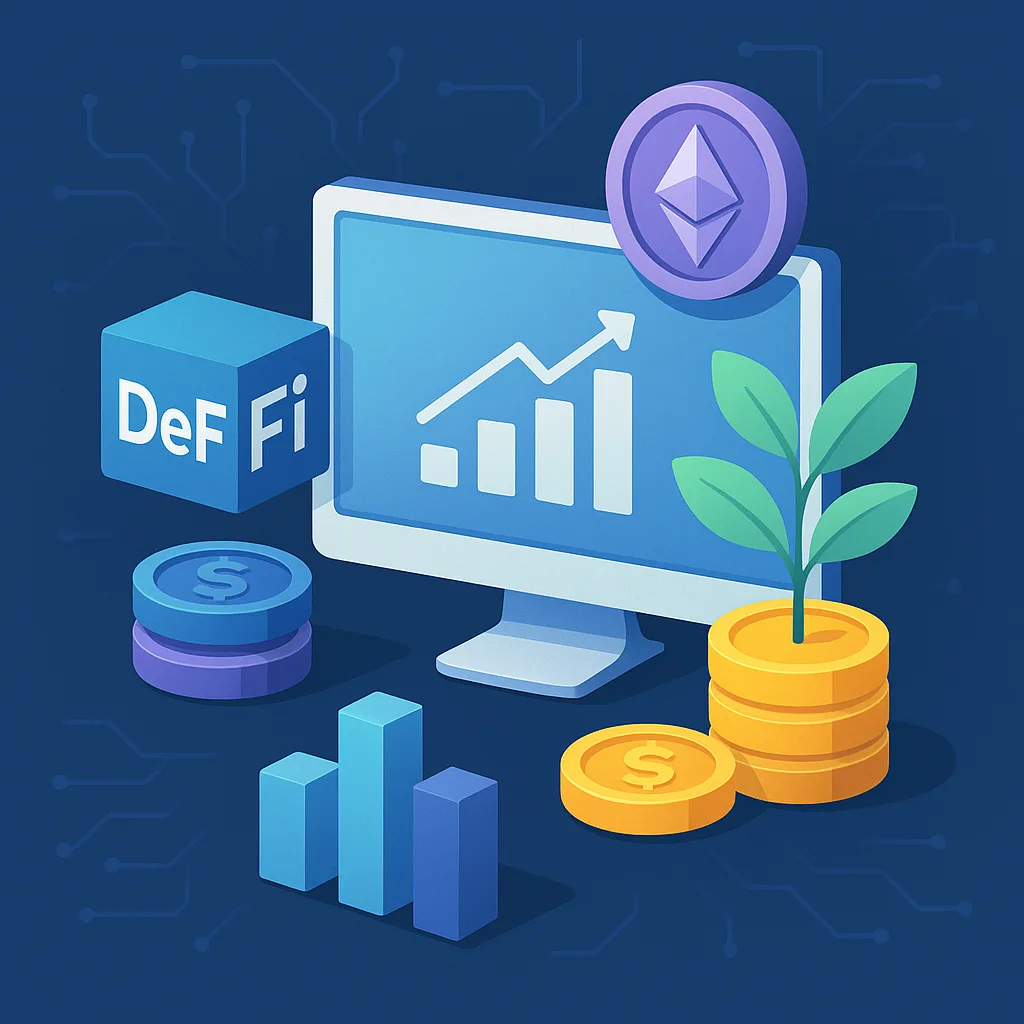
Decentralized Finance, or DeFi, represents a groundbreaking shift in the financial landscape, leveraging blockchain technology to create an open and permissionless financial ecosystem. Unlike traditional finance, which is often dominated by centralized institutions like banks and brokerage firms, DeFi operates on decentralized networks, allowing individuals to access financial services without intermediaries. This new paradigm not only enhances accessibility but also fosters innovation, enabling users to interact with financial products in novel ways.
At its core, DeFi aims to democratize finance by removing barriers and providing equal access to financial services for everyone, regardless of their location or economic status. Through the use of smart contracts—self-executing contracts with the terms of the agreement directly written into code—users can engage in a variety of financial activities such as lending, borrowing, trading, and earning interest on crypto assets in a secure and transparent manner. This shift towards automation and transparency is driving a new wave of financial products that challenge traditional offerings.
One of the most appealing aspects of DeFi is its potential for unprecedented financial inclusion. With DeFi platforms, anyone with an internet connection can participate in the global economy. This is particularly transformative for populations in underbanked regions where access to traditional banking services is limited. By leveraging decentralized protocols, users can trade, invest, and save without the need for a bank account or credit history, effectively leveling the playing field.
Moreover, the DeFi ecosystem is continually evolving, with new applications and platforms emerging every day. From decentralized exchanges (DEXs) that facilitate peer-to-peer trading to yield farming and liquidity mining that incentivize users to provide liquidity, the range of financial products available is expanding rapidly. As innovations in this space continue to unfold, they promise to reshape our understanding of finance and challenge the status quo, making DeFi a crucial area of exploration for anyone interested in the future of money.
Key Innovations in DeFi: What You Need to Know
Decentralized Finance (DeFi) has emerged as one of the most transformative forces in the financial landscape, leveraging blockchain technology to create a more open, transparent, and accessible financial system. At the heart of this revolution are several key innovations that are reshaping how individuals and institutions interact with money. Understanding these innovations is essential for anyone looking to navigate the evolving world of finance.
One of the most significant innovations in DeFi is the rise of automated market makers (AMMs). Unlike traditional exchanges that rely on order books and intermediaries, AMMs use liquidity pools to facilitate trading. Users can contribute their assets to these pools in exchange for a share of the transaction fees generated by trades. This model democratizes liquidity provision, allowing anyone to participate in the market and earn returns on their assets. As AMMs gain popularity, they are also pushing the boundaries of how we think about price discovery and market efficiency.
Another groundbreaking development is the introduction of lending and borrowing platforms that operate without the need for traditional banks. Protocols like Aave and Compound enable users to lend their assets to others in exchange for interest, while borrowers can take out loans without extensive credit checks or lengthy approval processes. This peer-to-peer lending model not only reduces the cost and friction associated with traditional banking but also allows for greater financial inclusion, giving individuals access to credit who may have been underserved by conventional financial institutions.
Furthermore, the emergence of yield farming and liquidity mining has created new opportunities for earning passive income in the DeFi space. Users can stake their assets in various protocols to earn rewards, often in the form of governance tokens that give them a say in the future of the project. This innovation has led to a surge of interest in DeFi, attracting both retail and institutional investors looking to capitalize on the high yields available compared to traditional savings accounts. However, while these opportunities are enticing, they also come with risks that must be carefully evaluated.
Smart Contracts: The Backbone of DeFi
At the heart of decentralized finance (DeFi) lies the revolutionary technology of smart contracts. These self-executing contracts with the terms of the agreement directly written into code are changing the way financial transactions are conducted. Smart contracts remove the need for intermediaries, allowing for peer-to-peer interactions that are not only faster but also more cost-effective. By executing automatically when predetermined conditions are met, they bring a level of transparency and trust previously unattainable in traditional finance.
The implications of smart contracts extend far beyond simple transactions. They enable complex financial instruments and services, such as decentralized exchanges, lending platforms, and yield farming protocols. For instance, a lending protocol can use smart contracts to facilitate the borrowing and lending of assets without the need for banks or other financial institutions. This reduces the risk of human error and fraud, providing users with an unprecedented level of security and efficiency.
Moreover, the programmability of smart contracts allows developers to innovate and create new financial products. With the ability to integrate various functionalities, such as collateralization, liquidation, and interest rate calculation, smart contracts empower users to engage in sophisticated financial strategies. As a result, the DeFi ecosystem is rapidly evolving, offering users an array of options that were once limited to institutional investors and high-net-worth individuals.
However, while smart contracts offer numerous advantages, they are not without their challenges. The code that underpins these contracts is only as good as the developers who write it. Vulnerabilities in smart contracts can lead to significant losses, as seen in several high-profile hacks within the DeFi space. Therefore, security audits and best practices in coding are essential to safeguard users' assets. As the DeFi landscape continues to grow, the importance of robust smart contracts will only increase, making them an integral part of the future of finance.
Yield Farming and Liquidity Mining: Maximizing Returns
As the decentralized finance (DeFi) ecosystem continues to evolve, two terms have emerged as pivotal in the quest for maximizing returns: yield farming and liquidity mining. At their core, both strategies incentivize users to provide liquidity to decentralized platforms, but they do so in distinct ways, each with its own risk and reward structure. Yield farming typically involves lending or staking cryptocurrencies in return for interest or additional tokens, allowing users to earn passive income from their holdings while simultaneously participating in the growth of DeFi protocols.
Yield farming can be likened to traditional farming, where users 'plant' their assets in a DeFi protocol and, in return, harvest yields over time. This process can involve various strategies, such as moving assets between different platforms to take advantage of the best interest rates or token rewards. The potential returns can be substantial, often reaching double or even triple-digit annual percentage yields (APYs). However, the high returns come with increased risks, including impermanent loss, smart contract vulnerabilities, and market volatility, which can affect asset prices and yields.
On the other hand, liquidity mining takes the concept a step further by rewarding users not just for providing liquidity but also for actively participating in the governance and growth of a platform. In liquidity mining, users contribute their assets to a liquidity pool, which is then used to facilitate trades on decentralized exchanges (DEXs). In exchange for their contributions, liquidity providers receive governance tokens, which grant them voting rights and a say in the future direction of the project. This approach not only incentivizes liquidity provision but also aligns the interests of users with the long-term success of the protocol, creating a vibrant ecosystem where participants are rewarded for their loyalty and involvement.
Both yield farming and liquidity mining exemplify the innovative spirit of the DeFi space, empowering individuals to take control of their financial futures. They offer creative avenues for maximizing returns beyond traditional banking models, appealing to both seasoned investors and newcomers alike. However, as with any investment, it is crucial for users to conduct thorough research and understand the risks involved before diving into these opportunities. As the DeFi landscape continues to mature, yield farming and liquidity mining may very well play a significant role in shaping the future of finance, making it more accessible and rewarding for everyone.
Decentralized Exchanges: The Future of Trading
Decentralized exchanges (DEXs) are at the forefront of the DeFi revolution, transforming the way individuals trade cryptocurrencies and other digital assets. Unlike traditional exchanges, which act as intermediaries between buyers and sellers, DEXs facilitate peer-to-peer transactions directly on the blockchain. This innovative approach not only enhances security and privacy but also empowers users by eliminating the need for a centralized authority.
One of the primary advantages of decentralized exchanges is their ability to maintain user control over funds. In traditional exchanges, users must deposit their assets into the platform's wallet, which exposes them to potential hacks and mismanagement. In contrast, DEXs allow users to retain ownership of their private keys, ensuring that they have full control over their assets throughout the trading process. This shift towards self-custody aligns with the core principles of cryptocurrencies, promoting autonomy and financial sovereignty.
Moreover, DEXs offer a wide range of trading pairs and liquidity options that are often unavailable on centralized platforms. By leveraging liquidity pools, users can contribute their assets to facilitate trades while earning rewards in return. This model not only enhances market efficiency but also democratizes access to liquidity, enabling anyone to participate in the trading ecosystem. As a result, DEXs have become increasingly popular among traders seeking to capitalize on market opportunities without the limitations imposed by centralized entities.
However, while the advantages of decentralized exchanges are compelling, they are not without challenges. Issues such as scalability, user experience, and regulatory uncertainty continue to pose hurdles for DEX adoption. Many platforms are actively working on solutions to enhance transaction speeds and reduce costs, while also striving to create user interfaces that cater to both novice and experienced traders. As the DeFi landscape continues to evolve, it is clear that decentralized exchanges will play a pivotal role in shaping the future of trading, offering a glimpse into a more open, secure, and equitable financial system.
Risks and Challenges in the DeFi Space
While the decentralized finance (DeFi) sector presents a myriad of opportunities for innovation and financial inclusion, it is not without its risks and challenges. One of the primary concerns is the lack of regulation. Unlike traditional financial systems, which are often governed by established regulatory frameworks, DeFi operates in a largely unregulated space. This absence of oversight can lead to vulnerabilities, including fraud, market manipulation, and a lack of consumer protection. Investors and users must navigate this landscape with caution, as the absence of regulatory safeguards amplifies the risks associated with financial transactions.
Another significant challenge is the security of smart contracts. DeFi platforms rely heavily on smart contracts to automate processes and facilitate transactions without intermediaries. However, these contracts are not infallible; vulnerabilities in code can be exploited by malicious actors, leading to the loss of funds. High-profile hacks and exploits have already resulted in substantial losses for users, highlighting the importance of rigorous security audits and ongoing vigilance. As the technology evolves, so too do the tactics employed by hackers, necessitating continuous improvements in security measures.
Liquidity is another critical issue facing the DeFi ecosystem. While many DeFi projects promise high returns and yield farming opportunities, these often rely on sufficient liquidity to function effectively. In times of market volatility, liquidity can dry up quickly, leaving users unable to execute trades or access their funds. This can lead to significant financial losses, particularly for those who are not prepared for sudden shifts in market conditions. As such, understanding the dynamics of liquidity in DeFi is essential for participants looking to mitigate their risks.
Lastly, user experience remains a formidable hurdle for broader adoption of DeFi solutions. Many platforms require a level of technical knowledge that can be intimidating for average users. Complicated interfaces, the necessity of managing private keys, and the complexity of transactions can deter individuals unfamiliar with blockchain technology. For DeFi to achieve its potential as an accessible financial alternative, developers must prioritize user-friendly designs and educational resources to empower a wider audience to engage safely and effectively.
Real-World Use Cases of DeFi Innovations
Decentralized Finance (DeFi) has rapidly evolved from a niche segment within the blockchain ecosystem to a fundamental force shaping the future of finance. As traditional financial systems grapple with inefficiencies and lack of transparency, DeFi offers innovative solutions that are both accessible and secure. One of the most compelling real-world use cases of DeFi is in lending and borrowing platforms. Unlike traditional banks, which require extensive paperwork and credit checks, DeFi platforms enable users to lend or borrow assets instantly using smart contracts. This democratizes access to capital, allowing individuals in underserved regions to participate in the global economy.
Another significant application of DeFi is in yield farming and liquidity provision. Users can stake their cryptocurrencies in decentralized exchanges (DEXs) to provide liquidity and earn a return on their investments. This practice not only incentivizes users to contribute to the liquidity pools but also enhances price stability and reduces slippage for traders. Additionally, yield farming has opened up new avenues for passive income, allowing individuals to earn rewards on their digital assets without the need for active trading. This has attracted both retail and institutional investors looking to maximize their returns in a low-interest-rate environment.
Insurance is yet another area where DeFi is making remarkable strides. Traditional insurance models often involve lengthy claims processes and a lack of transparency. However, DeFi insurance platforms leverage smart contracts to automate claims, creating a more efficient and transparent system. Users can purchase coverage for various risks, from smart contract failures to hacks, and receive instant payouts without the bureaucratic delays typically associated with insurance claims. This innovation not only builds trust among users but also encourages broader participation in the DeFi ecosystem.
Furthermore, DeFi is increasingly being utilized in cross-border payments and remittances. Traditional remittance services often charge high fees and take days to process transactions. In contrast, DeFi solutions enable near-instantaneous transfers at a fraction of the cost, which is particularly beneficial for migrant workers sending money back home. By leveraging blockchain technology, DeFi removes intermediaries, reduces transaction costs, and enhances accessibility—making financial services more inclusive for everyone.
Conclusion: The Future of Finance in a Decentralized World
As we stand at the intersection of technology and finance, the potential of decentralized finance (DeFi) is becoming increasingly apparent. The innovations emerging from this sector are not just reshaping how we view traditional financial systems; they are redefining the very principles of value exchange, trust, and economic participation. With blockchain technology at its core, DeFi empowers individuals by removing intermediaries, allowing for a more transparent and inclusive financial ecosystem. This shift is particularly significant for those who have historically been marginalized by conventional banking systems, providing them with access to essential financial services.
The future of finance will likely be characterized by a blending of traditional financial practices and decentralized innovations. We can expect to see established financial institutions embracing DeFi technologies to enhance their services, improve efficiency, and cut costs. This hybrid approach could lead to more robust regulatory frameworks as governments and financial authorities seek to ensure consumer protection while fostering innovation. However, the path is fraught with challenges, including regulatory uncertainties, security concerns, and the need for user education. Only by addressing these challenges can the DeFi sector reach its full potential.
Moreover, as DeFi continues to evolve, we may witness the rise of new business models that prioritize community governance and sustainability. The concept of decentralized autonomous organizations (DAOs) could play a pivotal role in shaping the future financial landscape, enabling users to have a say in the platforms they engage with. This democratization of finance could lead to more equitable wealth distribution and a stronger emphasis on social responsibility within the financial sector.
In conclusion, the future of finance in a decentralized world holds immense promise. As DeFi technologies advance and gain traction, they have the potential to create a more inclusive and efficient financial system that aligns with the needs of a diverse global population. By fostering innovation while addressing the inherent challenges, we can pave the way for a financial ecosystem that not only empowers individuals but also contributes to the greater good. The journey toward a decentralized financial future is just beginning, and it is one that we should all be eager to explore.