Introduction to Security in Cryptocurrency Exchanges
In an era where digital currencies are gaining unprecedented traction, the security of cryptocurrency exchanges has become a paramount concern for users and operators alike. These platforms serve as the primary gateways for buying, selling, and trading digital assets, making them attractive targets for cybercriminals. As the volume of transactions continues to soar, so does the sophistication of the attacks aimed at these exchanges. This necessitates a robust security framework to safeguard users' funds and personal information.
Cryptocurrency exchanges must navigate a complex landscape of threats, including hacking attempts, phishing schemes, and insider threats. Unlike traditional financial systems that have well-established regulations and protections, the cryptocurrency market often operates in a less regulated environment. This lack of oversight can lead to vulnerabilities that malicious actors exploit. Therefore, understanding the fundamentals of security in cryptocurrency exchanges is crucial for both exchange operators and users. It is essential to implement multiple layers of security measures to protect against potential breaches.
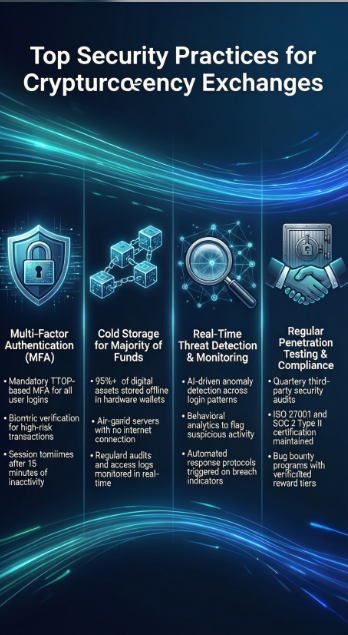
Security practices in cryptocurrency exchanges encompass a wide range of strategies, from securing the underlying technology infrastructure to ensuring that users follow safe trading practices. For exchange operators, this means adopting advanced encryption techniques, implementing multi-factor authentication, and conducting regular security audits to identify and rectify vulnerabilities. For users, awareness of common security threats and the adoption of best practices can significantly reduce the risk of falling victim to scams or hacks.
The unique nature of cryptocurrency transactions, which are irreversible and often anonymous, adds another layer of complexity to security practices. Once a transaction is completed, it cannot be undone, making it imperative for both exchanges and users to exercise caution. By fostering a culture of security awareness and implementing comprehensive security measures, cryptocurrency exchanges can not only protect their assets but also build trust with their user base. This trust is vital for the long-term success and growth of the cryptocurrency ecosystem.
Common Security Threats Facing Exchanges
Cryptocurrency exchanges are increasingly becoming prime targets for cybercriminals due to the high value of digital assets and the relatively nascent security frameworks within the industry. One of the most prevalent threats is the risk of hacking. Hackers often exploit vulnerabilities in an exchange's code or infrastructure to gain unauthorized access to user accounts and wallets, leading to substantial financial losses for both the exchange and its users. High-profile hacks, such as the infamous Mt. Gox incident, have highlighted the critical need for robust security measures to protect against such breaches.
Phishing attacks also pose a significant threat to cryptocurrency exchanges. In these scenarios, attackers create fake websites or communications that mimic legitimate exchanges to trick users into revealing their sensitive information, such as login credentials and private keys. As these tactics become more sophisticated, users must remain vigilant and educated about how to identify and avoid falling victim to such schemes. Continuous user education and awareness initiatives should be a part of any exchange's security strategy to mitigate this risk.
Another common threat is the risk associated with internal actors, which often goes overlooked. Insider threats can originate from employees or contractors who may misuse their access to the exchange's systems for personal gain. This could involve stealing funds directly, manipulating trading activities, or leaking sensitive information. Establishing strict access controls, monitoring employee activities, and conducting regular audits can help minimize the risk of insider threats.
Lastly, exchange operators must also contend with Distributed Denial of Service (DDoS) attacks. These attacks overwhelm an exchange’s servers with an influx of traffic, leading to service outages and unavailability for legitimate users. DDoS attacks can significantly harm an exchange's reputation and user trust. To combat this, exchanges should implement robust traffic management solutions and collaborate with security experts to develop effective incident response plans. By understanding these common threats, exchanges can better prepare themselves to fortify their defenses and protect user assets.
Best Practices for Securing User Accounts
In the rapidly evolving landscape of cryptocurrency exchanges, securing user accounts is paramount to safeguarding assets and personal information. Many users underestimate the importance of robust security measures, often opting for convenience over security. However, implementing strong account protection strategies is essential not just for individual users but also for the integrity of the entire exchange ecosystem.
One of the most effective methods for enhancing account security is the use of two-factor authentication (2FA). This additional layer of security requires users to provide two forms of identification before gaining access to their accounts, typically a password and a verification code sent to a mobile device or email. By requiring something the user knows (the password) and something the user has (the verification code), 2FA significantly reduces the risk of unauthorized access, even if the password is compromised.
Another critical practice is to encourage users to create strong, unique passwords. Passwords should be at least 12 characters long and include a combination of uppercase and lowercase letters, numbers, and special symbols. Additionally, users should be advised against reusing passwords across different platforms, as this can lead to cascading security breaches if one account is compromised. Utilizing password managers can help users generate and store complex passwords securely, thereby enhancing overall account security.
Furthermore, regular account monitoring and notifications are essential for early detection of suspicious activities. Cryptocurrency exchanges should implement systems that alert users of any unusual login attempts, changes to account settings, or withdrawals. This proactive approach not only empowers users to take swift action but also cultivates a culture of vigilance and security awareness. By adopting these best practices, both users and exchanges can work together to create a safer environment for cryptocurrency transactions, minimizing the risks associated with online trading.
Implementing Robust Platform Security Measures
To ensure the safety of users' assets and sensitive information, cryptocurrency exchanges must prioritize robust platform security measures. This begins with a comprehensive security architecture that includes multilayered defenses against cyber threats. A well-structured security framework should integrate various components, such as firewalls, intrusion detection systems, and secure application development practices. By leveraging these technologies, exchanges can create a fortified environment that deters potential attackers and minimizes vulnerabilities.
One of the key elements of a secure cryptocurrency exchange is the implementation of two-factor authentication (2FA). This additional layer of security requires users to provide two forms of identification before accessing their accounts, significantly reducing the risk of unauthorized access. In addition to 2FA, exchanges should also consider employing biometric authentication methods, such as fingerprint or facial recognition, to further enhance user account security. By encouraging users to adopt these security measures, exchanges not only protect their assets but also foster trust and confidence within the trading community.
Regular security audits and penetration testing are crucial components of maintaining platform security. By conducting thorough assessments, exchanges can identify potential weaknesses in their systems and address them proactively. Engaging third-party security experts to perform these evaluations can provide an unbiased perspective and reveal vulnerabilities that internal teams may overlook. Moreover, keeping software and systems up to date with the latest security patches is essential for protecting against known exploits and vulnerabilities.
Furthermore, data encryption plays a vital role in safeguarding sensitive information stored on cryptocurrency exchanges. By implementing strong encryption protocols for both data at rest and data in transit, exchanges can ensure that even if data breaches occur, the compromised information remains unreadable to unauthorized individuals. Additionally, implementing a secure backup strategy will ensure that critical data can be restored in case of a cyber incident, minimizing potential losses and downtime. In an industry where trust is paramount, adhering to these robust security practices is essential for the long-term success and reputation of cryptocurrency exchanges.
Importance of Regular Security Audits
In the rapidly evolving world of cryptocurrency, the importance of regular security audits cannot be overstated. With the increasing number of cyberattacks targeting cryptocurrency exchanges, conducting thorough and frequent security audits has become a critical component of safeguarding sensitive information and maintaining user trust. These audits help identify vulnerabilities in the system before they can be exploited by malicious actors, ensuring that the exchange remains robust against potential threats.
Regular security audits serve as a proactive measure, allowing exchanges to assess their current security posture and implement necessary improvements. By engaging third-party security firms or utilizing internal teams, exchanges can conduct a comprehensive review of their security protocols, software, and infrastructure. This process typically involves penetration testing, which simulates cyberattacks to identify weaknesses, as well as code reviews and compliance checks against industry standards. Such audits not only highlight existing vulnerabilities but also evaluate the effectiveness of current security measures and suggest best practices for improvement.
Moreover, security audits foster a culture of transparency and accountability within cryptocurrency exchanges. By publicly committing to regular audits and sharing their findings, exchanges can build trust with their users, demonstrating their dedication to protecting their assets. This transparency can serve as a competitive advantage in a market where users are increasingly cautious about where they store their cryptocurrencies. When users feel confident that an exchange is taking security seriously, they are more likely to engage with the platform and recommend it to others.
Additionally, regular security audits help exchanges stay compliant with regulatory requirements, which are becoming more stringent as governments and financial authorities seek to protect consumers in the cryptocurrency space. By adhering to best practices and regulatory standards, exchanges can avoid potential legal repercussions and maintain their operational licenses. In conclusion, regular security audits are not just a best practice; they are an essential aspect of running a secure, trustworthy cryptocurrency exchange that prioritizes user safety and confidence.
User Education on Security Awareness
In the rapidly evolving world of cryptocurrency, security awareness is paramount for both exchanges and their users. One of the most effective ways to mitigate risks associated with cryptocurrency trading is through comprehensive user education. By empowering users with knowledge about potential threats and best practices, exchanges can create a more secure trading environment. This includes providing resources on how to recognize phishing attacks, the importance of strong passwords, and the necessity of enabling two-factor authentication (2FA) for accounts.
Phishing attacks remain one of the leading methods through which bad actors gain access to user accounts. Users often receive deceptive emails or messages that mimic legitimate communication from cryptocurrency exchanges. Educating users to scrutinize the URLs of sites they visit, verify the authenticity of communications, and avoid clicking on suspicious links can significantly reduce the chances of falling prey to these tactics. Regularly updating users about common scams and how to identify them can also serve as a proactive measure against such threats.
Additionally, password security is a cornerstone of user education. Users must understand the importance of creating complex passwords that are difficult to guess. Exchanges can implement guidelines for password creation, encouraging users to include a mix of uppercase and lowercase letters, numbers, and special characters. Moreover, urging users to change their passwords regularly and to avoid using the same password across multiple platforms is essential in maintaining account integrity.
Two-factor authentication (2FA) is another critical layer of security that users should be educated about. With 2FA enabled, even if a hacker manages to obtain a user’s password, they would still need access to a second form of identification, such as a text message or authentication app, to gain entry. Exchanges should provide clear instructions on how to set up 2FA and the benefits it offers in protecting user accounts. By fostering a culture of security awareness and continuous education, cryptocurrency exchanges can not only protect their users but also enhance their overall reputation in the industry.
Regulatory Compliance and Its Role in Security
In the rapidly evolving landscape of cryptocurrency exchanges, regulatory compliance plays a crucial role in ensuring security for both the platform and its users. Regulatory bodies across the globe are increasingly recognizing the need to enforce stringent guidelines to protect consumers and maintain the integrity of the financial system. Compliance with these regulations not only helps in mitigating risks but also enhances the trustworthiness of the exchange, attracting a broader user base.
One of the primary regulations affecting cryptocurrency exchanges is the need for Know Your Customer (KYC) and Anti-Money Laundering (AML) policies. These requirements mandate exchanges to verify the identities of their users and monitor transactions for suspicious activities. By implementing robust KYC and AML processes, exchanges can significantly reduce the risk of fraud and illegal activities, thereby safeguarding their platforms from potential regulatory penalties and reputational damage. This proactive approach fosters a safer trading environment and reassures users that their assets are being managed responsibly.
Furthermore, adhering to regulatory compliance can also facilitate smoother operations across different jurisdictions. As cryptocurrency becomes a global phenomenon, exchanges must navigate a patchwork of regulations that can vary significantly from one country to another. By maintaining compliance with local laws, exchanges can avoid legal complications and ensure uninterrupted service to their customers. This is particularly vital during international transactions, where the risk of regulatory violations can increase due to varying legal standards.
Finally, regulatory compliance can serve as a competitive advantage in the market. As users become more aware of the risks associated with cryptocurrency trading, they are increasingly seeking out exchanges that prioritize security and compliance. By demonstrating a commitment to regulatory standards, exchanges can differentiate themselves from unregulated platforms, potentially leading to increased user loyalty and market share. In conclusion, regulatory compliance is not merely a legal obligation for cryptocurrency exchanges; it is an integral part of a comprehensive security strategy that enhances user trust, mitigates risks, and promotes a stable trading environment.
Conclusion: Building a Secure Future for Cryptocurrency Exchanges
As the cryptocurrency market continues to expand and evolve, the importance of robust security practices for exchanges cannot be overstated. With the increasing number of cyber threats and attacks targeting digital assets, exchanges must prioritize the implementation of comprehensive security measures. By adopting a proactive approach to security, exchanges can not only protect their users’ assets but also enhance their reputation and foster greater trust within the cryptocurrency community.
To build a secure future, exchanges should focus on a multi-faceted security strategy that includes advanced encryption methods, regular audits, and continuous monitoring of their systems. Implementing cold storage solutions for the majority of assets can significantly reduce exposure to online threats. Moreover, educating users about security best practices, such as enabling two-factor authentication and recognizing phishing attempts, is crucial in creating a more secure environment for all participants in the ecosystem.
Furthermore, it is essential for exchanges to stay informed about the latest security trends and emerging threats. Collaboration with cybersecurity experts and participation in industry forums can provide valuable insights into new vulnerabilities and innovative solutions. Additionally, establishing a culture of transparency and accountability can help build trust with users, as they will feel more secure knowing that the exchange is committed to safeguarding their investments.
In conclusion, the future of cryptocurrency exchanges hinges on their ability to prioritize security. By embracing a comprehensive approach that includes technological advancements, user education, and industry collaboration, exchanges can create a resilient infrastructure that not only withstands current threats but also adapts to future challenges. As the landscape of cryptocurrency continues to change, those exchanges that invest in security will ultimately thrive and lead the way in establishing a safer digital asset environment for everyone.