Introduction: Understanding the Current Bitcoin Landscape
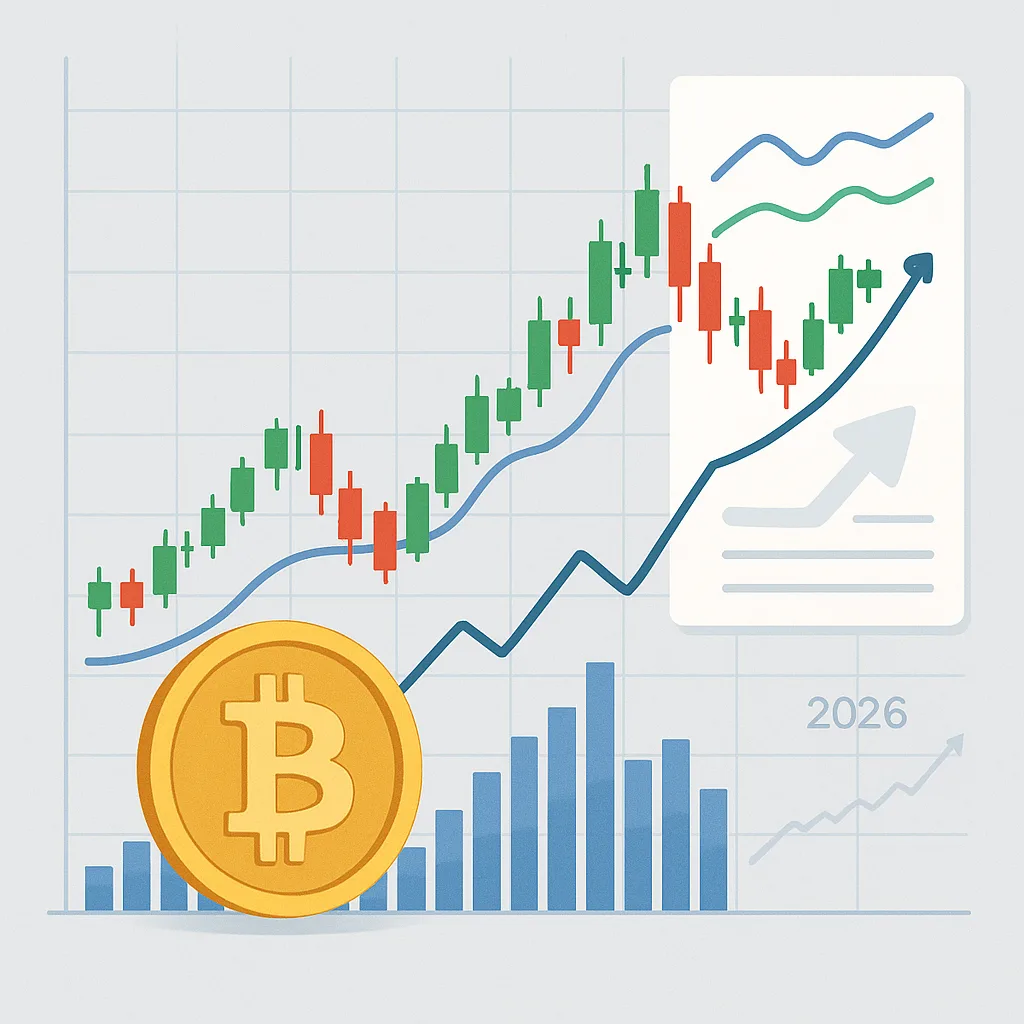
As we move into 2026, the Bitcoin landscape is evolving at a remarkable pace, influenced by technological advancements, regulatory changes, and shifts in market sentiment. Bitcoin, the pioneering cryptocurrency, has long been a focal point for traders and investors alike. Its price movements are often characterized by volatility, presenting both opportunities and risks. To navigate this dynamic environment successfully, it's essential to understand the current factors influencing Bitcoin's price and how they may shape trading strategies moving forward.
One of the primary drivers of Bitcoin's price is its supply and demand dynamics. With the total supply of Bitcoin capped at 21 million coins, scarcity plays a significant role in its valuation. As more institutional investors enter the market and retail interest grows, we see increased demand for Bitcoin, pushing prices higher. Additionally, macroeconomic factors such as inflation rates, interest rates, and geopolitical events can impact investor sentiment and, consequently, Bitcoin's price. Analyzing these factors is crucial for traders looking to capitalize on price movements in 2026.
Technological advancements within the Bitcoin ecosystem also contribute to its price behavior. Innovations like the Lightning Network aim to enhance transaction speed and reduce fees, making Bitcoin more accessible for everyday transactions. Furthermore, developments in blockchain technology and increased adoption by businesses and payment platforms can create a positive feedback loop, fueling demand and potentially elevating prices. Understanding these technological trends will be pivotal for traders seeking to identify entry and exit points in their trading strategies.
Lastly, regulatory considerations cannot be overlooked. Governments around the world are increasingly focusing on cryptocurrency regulations, which can have profound effects on Bitcoin's market. From taxation policies to anti-money laundering regulations, the evolving legal landscape will shape how Bitcoin is traded and perceived. Traders must remain vigilant and informed about these regulatory changes to adapt their strategies accordingly. In this blog post, we will explore various trading strategies tailored for the 2026 Bitcoin market, providing insights to help you make informed decisions in this ever-changing environment.
Recent Price Trends: Analyzing Bitcoin's Movement Near $63,000
As we delve into the price movements of Bitcoin, it’s essential to focus on its recent behavior around the pivotal $63,000 mark. This price point has been a significant fulcrum for traders and investors alike, serving as both a psychological barrier and a technical level for analysis. Over the past few months, Bitcoin has exhibited considerable volatility, oscillating between $55,000 and $65,000, with $63,000 acting as a focal point for market sentiment. Insights into DeFi innovations.
In analyzing the recent trends, we observe that Bitcoin has repeatedly tested the $63,000 level, which has resulted in a series of price fluctuations. Following an initial surge past this threshold, Bitcoin faced resistance that led to a pullback, indicating that many traders were taking profits at this level. This behavior illustrates the importance of understanding market psychology; the $63,000 mark has become synonymous with a point of profit-taking for many investors, thus creating a cyclical pattern of buying and selling.
Moreover, technical indicators provide further insights into Bitcoin's movements around this price level. The Relative Strength Index (RSI) has shown periods of overbought conditions when Bitcoin trades above $63,000, suggesting that caution may be warranted for potential buyers. Conversely, when the price dips below this mark, the RSI often indicates oversold conditions, providing a potential opportunity for accumulation. These indicators serve as vital tools for traders looking to optimize their entry and exit strategies in this volatile market.
As we look toward 2026, understanding these price movements and the factors influencing them will be crucial for effective trading strategies. The interplay between market sentiment, technical analysis, and macroeconomic factors will continue to shape Bitcoin's trajectory. Traders should remain vigilant, employing a balanced approach that considers both the historical price patterns around $63,000 and the evolving market landscape to navigate the complexities of Bitcoin trading effectively.
Market Sentiment: What the Pippin Rally Indicates for Traders
The Pippin Rally, a term coined to describe the recent surge in Bitcoin's price, has captured the attention of traders and investors alike. Understanding market sentiment during this period is crucial for anyone looking to navigate the complexities of Bitcoin trading in 2026. Market sentiment refers to the overall attitude of investors toward a particular asset, and it can significantly influence price movements. During the Pippin Rally, the bullish sentiment has been palpable, driven by a combination of factors such as increased institutional interest, positive regulatory developments, and a general shift towards digital assets as a hedge against inflation. Advanced trading strategies for crypto.
One of the most notable aspects of the Pippin Rally is the surge in retail investor participation. Historically, retail investors have played a pivotal role in driving Bitcoin's price volatility. The current market sentiment indicates a strong belief in Bitcoin's long-term value, leading to increased buying activity. This influx of retail money often leads to rapid price increases, but it can also create a double-edged sword, as speculative trading can lead to sharp corrections. Traders should be aware of this dynamic and consider how retail sentiment might influence their strategies moving forward.
Furthermore, social media and online forums have become hotbeds for discussions surrounding Bitcoin, amplifying market sentiment. Platforms like Twitter and Reddit have seen a resurgence of interest, with Bitcoin enthusiasts sharing trading tips, market analyses, and predictions. This kind of collective sentiment can create self-fulfilling prophecies, where positive discussions lead to more buying and vice versa. As a trader, tapping into these online communities can provide valuable insights, but it is essential to filter out noise and focus on factual information that can support a well-rounded trading strategy.
Traders should also consider the impact of macroeconomic factors on market sentiment. With the ongoing global economic uncertainties, many investors are turning to Bitcoin not just as a speculative asset but as a safeguard against traditional market downturns. This shift in perspective can lead to sustained bullish trends if economic conditions remain unstable. Therefore, staying informed about global economic indicators and how they correlate with Bitcoin’s price movements will be crucial for traders aiming to capitalize on the opportunities presented by the Pippin Rally in 2026.
Technical Analysis: Key Indicators to Watch
In the ever-evolving world of cryptocurrency trading, particularly with Bitcoin, technical analysis (TA) plays a crucial role in shaping trading strategies. As we look ahead to 2026, understanding the key indicators that can influence Bitcoin's price movements will be vital for traders seeking to capitalize on market fluctuations. This section will delve into a few of the most essential technical indicators that traders should keep an eye on.
One of the primary tools in any trader’s arsenal is the Moving Average (MA). This indicator smooths out price data to identify trends over a specified period. Traders commonly use two types: the Simple Moving Average (SMA) and the Exponential Moving Average (EMA). The EMA gives more weight to recent prices, making it more responsive to price changes compared to the SMA. In 2026, watch for crossovers between short-term and long-term MAs as potential buy or sell signals; when a short-term MA crosses above a long-term MA, it may indicate a bullish trend, while the opposite may signal a bearish trend. Manage risk in volatile markets.
Another essential indicator is the Relative Strength Index (RSI), which measures the speed and change of price movements on a scale from 0 to 100. An RSI above 70 typically indicates that Bitcoin is overbought, while an RSI below 30 suggests it is oversold. These levels can serve as critical points for traders looking to enter or exit positions. In 2026, traders should be particularly vigilant in recognizing divergence between the RSI and Bitcoin’s price movements, as this can signal potential reversals in trend.
Additionally, the Moving Average Convergence Divergence (MACD) is a powerful tool that combines both trend-following and momentum indicators. The MACD consists of two moving averages and a histogram that represents the relationship between them. When the MACD line crosses above the signal line, it generates a buy signal, while a cross below can indicate a sell signal. Keeping an eye on the MACD can help traders identify shifts in momentum that may precede significant price movements. As we approach 2026, integrating these indicators into a comprehensive trading strategy will be essential for navigating the complexities of Bitcoin trading.
Trading Strategies for Bitcoin: Preparing for Volatility
As we look towards 2026, the landscape of Bitcoin trading is poised for significant shifts, influenced by both macroeconomic factors and technological advancements. Traders must equip themselves with robust strategies designed to navigate the inherent volatility of cryptocurrency markets. Understanding how to effectively respond to price fluctuations is crucial for maximizing potential gains while minimizing risks.
One effective strategy for trading Bitcoin is the use of technical analysis. By analyzing historical price patterns and utilizing various indicators, traders can identify potential entry and exit points. Tools such as moving averages, Relative Strength Index (RSI), and Fibonacci retracement levels can provide valuable insights. For instance, a trader might look for a bullish crossover in moving averages to signal a potential upward trend, while RSI can help identify overbought or oversold conditions, suggesting when to take profits or cut losses.
Another vital strategy is implementing a diversified portfolio. While Bitcoin may dominate the cryptocurrency market, it is essential to explore other altcoins and tokens that could exhibit strong performance during periods of high volatility. By spreading investments across various assets, traders can mitigate risks associated with Bitcoin's price swings. Additionally, consider incorporating stablecoins into your portfolio as a means to preserve capital during downturns, providing liquidity for future buying opportunities.
Finally, employing risk management techniques is non-negotiable in a volatile market. Position sizing, stop-loss orders, and take-profit orders are tools that can help traders protect their capital. For example, setting a stop-loss order at a predetermined percentage below the entry price can prevent devastating losses during sharp market corrections. Similarly, establishing take-profit levels allows traders to secure gains before the market may reverse. By adhering to these risk management strategies, traders can approach the Bitcoin market with confidence, ready to capitalize on opportunities while safeguarding their investments.
Diversifying Your Portfolio: Beyond Bitcoin in 2026
As the cryptocurrency landscape continues to evolve, traders and investors alike are recognizing the importance of diversification in their portfolios. While Bitcoin has long been considered the gold standard of digital currencies, relying solely on it may expose traders to unnecessary risks. In 2026, those looking to navigate the volatile waters of cryptocurrency trading should consider a broader approach that includes a variety of assets.
One of the main advantages of diversifying your portfolio is the potential for risk mitigation. Cryptocurrencies other than Bitcoin, such as Ethereum, Cardano, and Solana, have shown promise in terms of technology and utility. By incorporating these alternative assets into your trading strategy, you can reduce the impact of Bitcoin's price fluctuations on your overall portfolio. For instance, Ethereum's smart contract capabilities and its role in decentralized finance (DeFi) can provide exposure to burgeoning sectors within the crypto space.
Moreover, diversification allows traders to capitalize on different market trends and developments. Each cryptocurrency has its unique value proposition, and understanding these can provide opportunities for profit. For instance, tokens that are part of emerging sectors like non-fungible tokens (NFTs) or Web3 applications may present lucrative trading opportunities that Bitcoin may not. By allocating a portion of your investment into these innovative projects, you can capture potential upside while balancing out the volatility associated with Bitcoin.
In addition to selecting alternative cryptocurrencies, consider integrating other asset classes into your portfolio, such as stocks, commodities, or even real estate. This multi-asset approach can enhance your overall returns while managing risk effectively. As 2026 unfolds, the interconnectedness of traditional and digital markets will likely become more pronounced, making a diversified portfolio not just advisable, but essential for any serious trader. MYX price.
Risk Management: Safeguarding Your Investments
In the volatile world of cryptocurrency trading, especially with an asset as iconic as Bitcoin, risk management is paramount. The price of Bitcoin can experience significant fluctuations, influenced by a myriad of factors including market sentiment, regulatory changes, and macroeconomic conditions. Thus, having a robust risk management strategy is essential for any trader looking to navigate the unpredictable nature of Bitcoin's price movements in 2026.
The first step in effective risk management is to determine your risk tolerance. This refers to the amount of capital you can afford to lose without impacting your financial stability. Establishing this limit will guide your trading decisions and help you avoid emotional reactions to market swings. For example, if your risk tolerance allows for a maximum loss of 5% on any trade, ensure you stick to this rule no matter how enticing a particular setup may seem.
Another critical component of risk management is the use of stop-loss orders. These are pre-set orders that automatically sell your Bitcoin if it reaches a certain price, thereby limiting potential losses. By implementing stop-loss orders, you can protect your capital from significant downturns and avoid the stress of watching your investments plummet. It’s advisable to place stop-loss levels based on technical analysis, such as support and resistance levels, rather than arbitrary figures.
Diversification is also a key strategy in risk management. While Bitcoin may be the flagship cryptocurrency, investing in a variety of assets can help mitigate risk. By spreading your investments across different cryptocurrencies or even other asset classes, you can reduce the impact of Bitcoin's volatility on your overall portfolio. Additionally, considering the use of dollar-cost averaging, where you invest a fixed amount at regular intervals, can help smooth out the effects of market fluctuations and reduce the risk of making poorly timed investments. Futures trading.
Conclusion: Staying Agile in a Dynamic Market
As we look ahead to 2026, the landscape of Bitcoin trading is likely to be shaped by a multitude of factors, including macroeconomic trends, regulatory developments, and technological advancements. Understanding these elements is crucial for traders aiming to navigate the complexities of the cryptocurrency market. The volatility that has characterized Bitcoin's price movements presents both opportunities and risks, making it essential for traders to remain agile and adaptable in their strategies.
One of the most effective approaches to trading Bitcoin is to stay informed and responsive to market signals. This means not only keeping an eye on price charts but also understanding the broader context, including news events, changes in investor sentiment, and shifts in market psychology. Utilizing technical analysis tools can help traders identify patterns and potential entry and exit points, but integrating fundamental analysis is equally important for a well-rounded perspective.
Moreover, risk management should be at the forefront of any trading strategy. Setting stop-loss orders, diversifying investments, and not over-leveraging positions can help safeguard against the inherent unpredictability of Bitcoin's market. Traders should also consider employing automated trading systems or algorithms, which can react to market changes faster than manual trading and help capitalize on fleeting opportunities.
Ultimately, the key to successful Bitcoin trading in 2026 will be continuous learning and adaptation. The cryptocurrency market is not static; it evolves rapidly, often in response to external pressures. By staying educated about market dynamics and embracing a flexible trading approach, traders can position themselves to not only survive but thrive in this ever-changing environment.