Introduction to Litecoin and Its Market Position
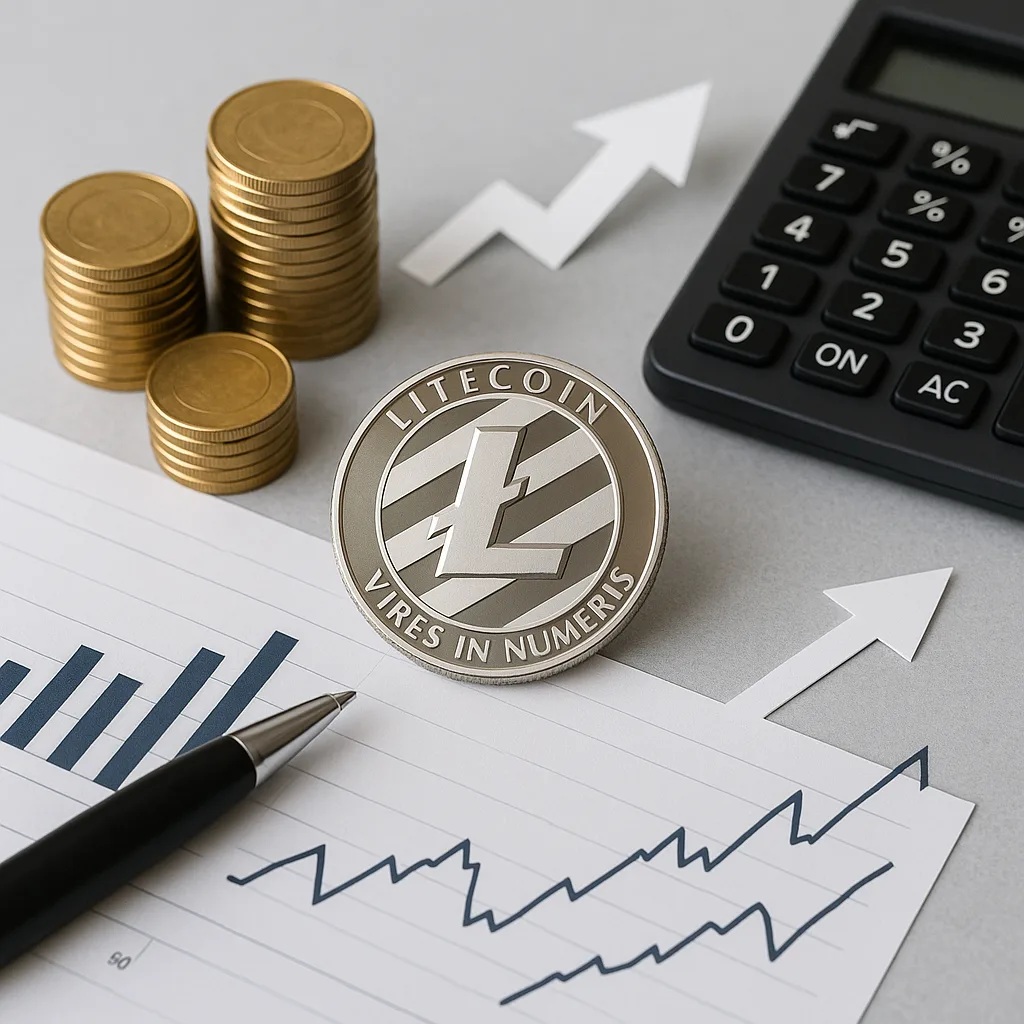
Litecoin, often dubbed the 'silver to Bitcoin's gold,' is a peer-to-peer cryptocurrency that was created by Charlie Lee in 2011. Designed to facilitate fast and low-cost transactions, Litecoin has carved out a significant niche within the digital currency market. Its underlying technology is based on the Bitcoin protocol but with some key differences, including a shorter block generation time and a different hashing algorithm. This positions Litecoin as a practical alternative for everyday transactions while maintaining the robust security and decentralization that cryptocurrencies promise.
Litecoin is one of the most established cryptocurrencies, consistently ranking among the top ten in market capitalization. Its longevity and resilience in the face of market volatility speak to its reliability as an investment vehicle. Furthermore, Litecoin's active development community and the adoption of the Lightning Network aim to enhance its scalability and transaction efficiency. These attributes contribute to its appeal as a long-term investment option for both seasoned investors and newcomers in the crypto space.
In recent years, Litecoin has also made strides by integrating privacy features and smart contract capabilities, which enhance its utility beyond mere transactions. As a result, it has garnered attention from various sectors, including finance and technology, which recognize its potential for future applications. This versatility is a significant factor in its enduring market presence, as it continually adapts to the evolving landscape of cryptocurrency.
Despite the competitive nature of the crypto market, Litecoin's established infrastructure and community support provide a solid foundation for growth. Investors looking to enter the cryptocurrency space often consider Litecoin due to its relatively stable price history and potential for appreciation. As we delve deeper into investment strategies and staking opportunities, understanding Litecoin's position in the market will be crucial for making informed decisions and maximizing returns.
Understanding Litecoin's Technology and Use Cases
Litecoin, created by Charlie Lee in 2011, is often referred to as the silver to Bitcoin's gold. It was designed to provide fast, secure, and low-cost transactions, making it a practical alternative for everyday use. Built on a decentralized blockchain technology similar to Bitcoin, Litecoin employs a different hashing algorithm called Scrypt, which allows for quicker transaction processing times. This unique feature enables Litecoin to confirm transactions approximately four times faster than Bitcoin, making it an attractive option for those who prioritize speed in their digital transactions. Guide for Litecoin users.
One of the primary use cases of Litecoin is as a medium of exchange. Its lower transaction fees and faster confirmation times make it ideal for both everyday transactions and microtransactions. Merchants can benefit from accepting Litecoin as a payment method, as it allows them to cater to a broader audience, including those who may find traditional banking systems cumbersome or expensive. Furthermore, as more businesses begin to accept cryptocurrencies, Litecoin's role as a viable payment method continues to grow, increasing its adoption and potential value.
Additionally, Litecoin has positioned itself as a testing ground for innovations that are later implemented in Bitcoin. For example, it was one of the first cryptocurrencies to adopt the Segregated Witness (SegWit) upgrade, which enhances the capacity of the blockchain by separating transaction signatures from the transaction data. This innovation not only improves transaction speed but also paves the way for the implementation of the Lightning Network, a layer-2 scaling solution that further enhances transaction efficiency. By being at the forefront of such advancements, Litecoin continues to maintain relevance and appeal in the fast-evolving cryptocurrency landscape.
Moreover, Litecoin's strong community support and active development team contribute to its ongoing evolution. With various updates and improvements planned for the future, such as enhanced privacy features and integration with decentralized finance (DeFi) applications, Litecoin is well-positioned to adapt to the changing demands of the market. Understanding these technological foundations and use cases is crucial for investors looking to capitalize on Litecoin's growth potential while navigating the staking landscape effectively.
Investment Strategies for Litecoin: An Overview
Investing in Litecoin can be a rewarding endeavor, especially when approached with well-defined strategies. As one of the earliest cryptocurrencies, Litecoin has established itself as a reliable alternative to Bitcoin, often referred to as the 'silver to Bitcoin's gold.' Its faster transaction times and lower fees make it an attractive option for both investors and users. However, to maximize your potential returns, understanding various investment strategies is crucial. Strategies for crypto staking success.
One effective strategy for investing in Litecoin is dollar-cost averaging (DCA). This approach involves investing a fixed amount of money into Litecoin at regular intervals, regardless of its price. By doing so, investors can mitigate the impact of market volatility, as they buy more tokens when prices are low and fewer when prices are high. Over time, this can lead to a lower average cost per coin and reduce the emotional stress often associated with timing the market.
Another strategy worth considering is the use of technical analysis. Investors can analyze historical price movements and trading volumes to identify potential entry and exit points. By understanding patterns and trends, you can make informed decisions on when to buy or sell Litecoin. Various indicators, such as moving averages, relative strength index (RSI), and MACD, can help traders gauge market sentiment and potential price movements. While technical analysis does not guarantee success, it can enhance your ability to make educated trading decisions.
For those looking to hold Litecoin long-term, a buy-and-hold strategy can be effective. This involves purchasing Litecoin and keeping it in a secure wallet, allowing it to appreciate over time. This strategy is particularly suitable for investors who believe in the long-term viability of Litecoin and are less concerned with short-term fluctuations. It’s essential to conduct thorough research on Litecoin's fundamentals and its position in the broader cryptocurrency ecosystem to bolster confidence in this long-term investment approach.
Staking Litecoin: How It Works and Its Benefits
Staking Litecoin is a relatively new concept in the cryptocurrency world, primarily because Litecoin itself does not use a proof-of-stake (PoS) model. Instead, it operates on a proof-of-work (PoW) system, similar to Bitcoin. However, there are ways to earn rewards through staking-like mechanisms in the broader sense of the term, especially when considering platforms that facilitate lending or yield farming with Litecoin. Understanding how these processes work can open up new avenues for investors looking to grow their assets.
When you stake cryptocurrencies, you essentially lock up your assets in a wallet to support the network's operations, such as validating transactions and maintaining security. In return, you earn rewards, usually in the form of more tokens. While Litecoin itself does not directly support staking in this manner, various exchanges and platforms offer services that allow you to earn interest by lending your Litecoin to others. This process is often referred to as 'yield farming' or 'crypto lending' and can provide returns that are competitive with traditional savings accounts or even higher-risk investments. Understanding risks in crypto staking.
One of the main benefits of staking-like strategies involving Litecoin is the potential for passive income. By lending your Litecoin, you can earn interest rates that vary depending on market demand, the platform you choose, and the risk involved. Many platforms allow users to set their own terms, enabling you to retain control over your assets while still generating income. This flexibility can be particularly appealing for investors who are looking to make their assets work for them without the need for active trading.
Moreover, staking through lending platforms can also provide liquidity, allowing you to access your funds more easily than if you were to commit them to a longer-term investment strategy. Another benefit is the potential for price appreciation of Litecoin itself. While your assets are lending, they can still gain value in the market, providing double benefits of both interest earnings and potential capital gains. Therefore, while traditional staking may not be available for Litecoin, exploring alternative methods can yield significant growth opportunities for savvy investors.
Risk Management in Litecoin Investments
Investing in Litecoin, like any cryptocurrency, carries inherent risks that investors must carefully navigate. The volatility of digital currencies can lead to significant price swings within short periods, making it essential for investors to adopt a robust risk management strategy. One of the first steps in managing risk is to determine your investment goals and risk tolerance. Are you in it for the long haul, or are you looking for short-term gains? By defining your investment horizon, you can better assess how much risk you are willing to take.
Diversification is a key principle in risk management. Instead of putting all your capital into Litecoin, consider diversifying your portfolio by including other cryptocurrencies and traditional assets. This approach can help mitigate the impact of adverse price movements in any single asset. By spreading your investments across various assets, you can reduce the overall risk while still participating in the potential growth of Litecoin and other cryptocurrencies. Moreover, keeping a portion of your portfolio in stablecoins can provide a buffer against market volatility, allowing you to retain liquidity when needed.
Another crucial aspect of risk management is setting clear entry and exit points. Establishing stop-loss orders can be an effective way to limit potential losses. For instance, if Litecoin reaches a predetermined price point, a stop-loss order will automatically sell your holdings, helping you avoid further losses. Additionally, consider taking profits at certain milestones to secure gains, especially during bullish trends. This disciplined approach can help prevent emotional decision-making, which can often lead to costly mistakes.
Finally, staying informed about market trends and regulatory developments is vital for managing risks in Litecoin investments. The cryptocurrency landscape is constantly evolving, and factors such as technological advancements, changes in regulations, and shifts in market sentiment can significantly impact prices. Regularly reviewing your investment strategy and adjusting it based on new information will not only help you manage risks but also position you advantageously for potential growth in the ever-changing world of cryptocurrency.
Market Trends and Future Outlook for Litecoin
Litecoin, often referred to as the 'silver to Bitcoin's gold,' has maintained a unique position in the cryptocurrency landscape since its inception in 2011. As one of the earliest altcoins, Litecoin has consistently garnered attention from both investors and the broader crypto community. In recent years, market trends indicate a resurgence in interest in Litecoin, particularly as institutional investors begin to recognize its potential as a viable asset for diversification. The ongoing development and upgrades to the Litecoin network, including the implementation of the Mimblewimble protocol, have further solidified its reputation as a forward-thinking cryptocurrency.
In 2023, the cryptocurrency market has experienced significant fluctuations, largely influenced by macroeconomic factors, regulatory developments, and technological advancements. Despite these challenges, Litecoin has shown resilience, often bouncing back from market downturns more swiftly than many of its counterparts. Analysts have noted an increase in trading volume and active addresses, suggesting a growing user base and heightened interest from retail investors. Furthermore, as more businesses begin to accept Litecoin as a form of payment, its utility could drive further demand and price appreciation.
Looking ahead, the future outlook for Litecoin appears promising. The upcoming halving event, scheduled for 2023, is anticipated to create a supply shock that could impact the price positively. Historically, Litecoin's price has seen significant rallies following halving events, driven by the reduction in block rewards and the consequent scarcity of the asset. Moreover, as blockchain technology continues to gain traction across industries, Litecoin's fast transaction times and low fees could position it as a preferred option for peer-to-peer transactions and remittances.
Additionally, the growing trend of decentralized finance (DeFi) and non-fungible tokens (NFTs) presents new opportunities for Litecoin to expand its use cases. As platforms integrating Litecoin into their ecosystems emerge, the potential for growth becomes even more substantial. Investors looking to capitalize on Litecoin's market trends should consider a long-term strategy that encompasses both staking and regular portfolio reviews, ensuring they stay informed about the ever-evolving cryptocurrency landscape. BTC price.
Comparative Analysis: Litecoin vs. Other Major Cryptos
When considering investment opportunities in the cryptocurrency space, it’s essential to understand how Litecoin (LTC) stacks up against other major cryptocurrencies such as Bitcoin (BTC) and Ethereum (ETH). Each of these cryptocurrencies has unique features and use cases, which can significantly impact their investment potential.
Litecoin, often referred to as the silver to Bitcoin’s gold, was created in 2011 by Charlie Lee. It shares many similarities with Bitcoin, including its decentralized nature and proof-of-work mechanism. However, Litecoin offers faster transaction speeds and lower fees, making it a more practical choice for everyday transactions. While Bitcoin can take up to 10 minutes to confirm a transaction, Litecoin averages around 2.5 minutes, which can be a significant advantage in a fast-paced market.
On the other hand, Ethereum introduces a different paradigm with its smart contract functionality. Unlike Litecoin and Bitcoin, which primarily serve as digital currencies, Ethereum functions as a platform for decentralized applications (dApps) and enables developers to create smart contracts. This versatility has led to a burgeoning ecosystem of dApps, making Ethereum a potentially more lucrative investment for those willing to embrace its complexity. However, Ethereum's transition to Ethereum 2.0, which aims to improve scalability and reduce energy consumption through a shift to proof-of-stake, has introduced a host of uncertainties that investors must navigate.
In terms of market cap and adoption, Bitcoin remains the king of cryptocurrencies, significantly overshadowing Litecoin. However, Litecoin's consistent updates and community support have maintained its relevance in the sector. When comparing growth potential, Litecoin's relatively lower market cap could provide a higher risk-reward ratio for investors. As institutional interest continues to grow in the cryptocurrency space, understanding the nuanced differences between these cryptocurrencies is crucial for strategic investment decisions. Ultimately, the choice between Litecoin, Bitcoin, and Ethereum will depend on individual investment goals, risk tolerance, and the specific features that align with their investment strategy. Futures trading.
Conclusion: Making Informed Decisions in Crypto Investment
Investing in cryptocurrencies like Litecoin requires careful consideration and a strategic approach. As the landscape of digital assets continues to evolve, understanding the nuances of staking and growth potential becomes crucial for both novice and seasoned investors. In this rapidly changing environment, making informed decisions is not just beneficial; it is essential for safeguarding your investments and maximizing returns.
One of the key aspects of investing in Litecoin is to stay updated with market trends and technological advancements. Litecoin, often referred to as the silver to Bitcoin's gold, boasts a strong community and a track record of innovation. By following developments in the Litecoin ecosystem, such as potential upgrades and partnerships, you can better gauge the asset's future performance. Additionally, monitoring broader market conditions and sentiment will help you identify optimal entry and exit points for your investments.
Staking Litecoin offers an alternative avenue for generating passive income, but it is essential to approach it with a clear strategy. Assessing the staking platforms available, their fees, and the associated risks will allow you to select the most suitable option for your investment goals. Moreover, diversification within your crypto portfolio can help mitigate risks associated with staking. By spreading your investments across different assets and platforms, you can increase your chances of achieving consistent growth while minimizing potential losses.
Ultimately, the key to successful investment in Litecoin—or any cryptocurrency—is to remain disciplined and avoid emotional decision-making. Establishing a well-defined investment plan, including your risk tolerance and long-term objectives, will serve as a guiding framework in your investment journey. With the right strategies and a commitment to continuous learning, you can navigate the complexities of the crypto market and unlock the full potential of your Litecoin investments.