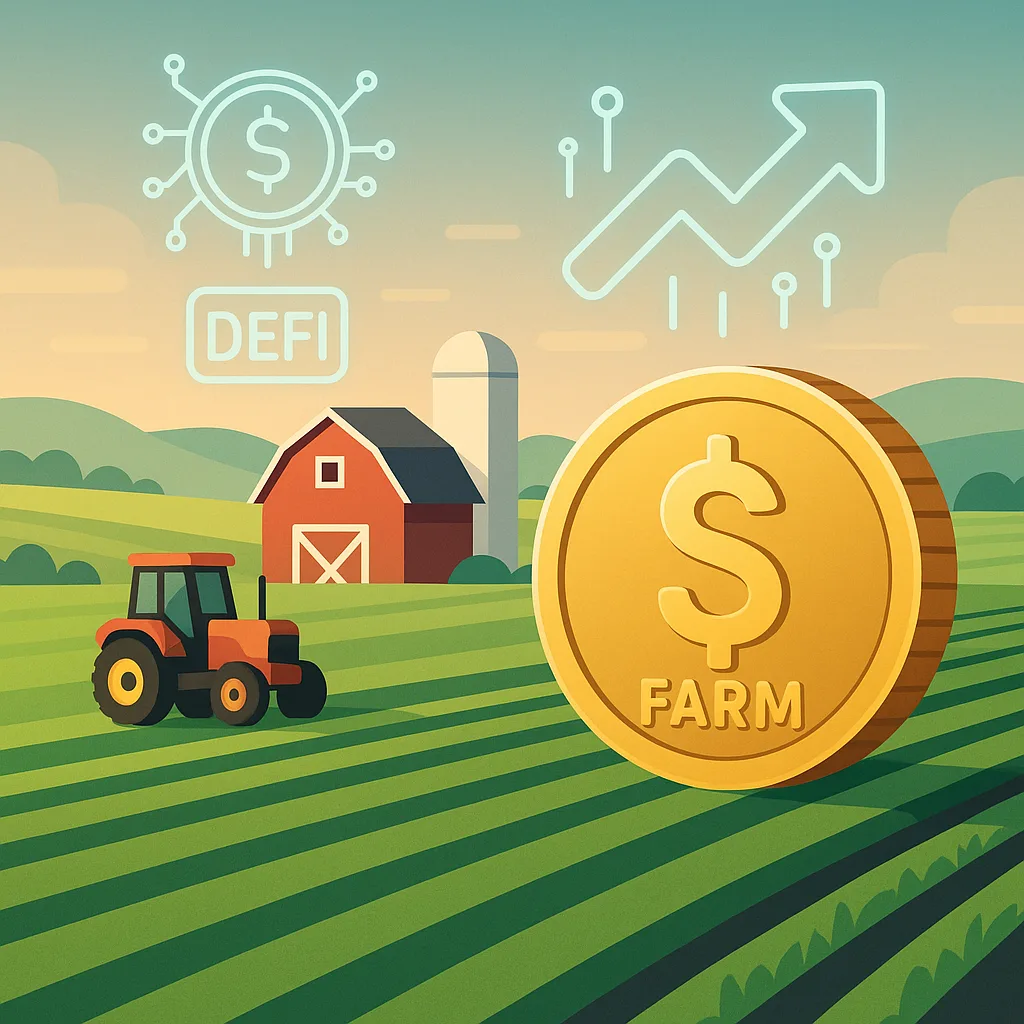
Introduction to $FARM and its Vision for Agriculture
In recent years, the agricultural sector has faced numerous challenges, from climate change and resource scarcity to fluctuating market prices and the need for sustainable practices. As we look toward 2026, the intersection of decentralized finance (DeFi) and agriculture has introduced a transformative solution in the form of $FARM. This innovative token aims to reshape the agricultural landscape by leveraging blockchain technology to enhance transparency, efficiency, and accessibility across the supply chain.
$FARM is not just a cryptocurrency; it represents a movement toward empowering farmers and consumers alike. By utilizing smart contracts and decentralized applications, $FARM creates an ecosystem where agricultural stakeholders can engage in peer-to-peer transactions without the need for intermediaries. This reduces costs and increases profit margins for farmers while providing consumers with fresher, locally sourced products at competitive prices. The vision of $FARM is to create a resilient agricultural economy that is both profitable and sustainable.
At its core, $FARM promotes a community-driven approach that encourages participation from all levels of the agricultural sector. Farmers can tokenize their crops, enabling them to access financing options that were previously unavailable to them, thus fostering innovation and growth. Additionally, through the integration of decentralized autonomous organizations (DAOs), farmers can have a say in the governance of the platform, making decisions that directly impact their livelihoods. This democratic approach lays the groundwork for a more equitable agricultural system that benefits everyone involved.
Moreover, the $FARM ecosystem is designed to address environmental concerns by incentivizing sustainable practices. Through token rewards for environmentally friendly farming methods, $FARM encourages farmers to adopt techniques that protect the planet. This not only helps combat climate change but also enhances the quality and safety of the food supply. As the world increasingly prioritizes sustainability, $FARM positions itself as a pioneer in agricultural DeFi, paving the way for a future where technology and ecology coexist harmoniously.
The Current State of Agricultural Finance in 2026
As we step into 2026, the landscape of agricultural finance has undergone a significant transformation, largely driven by advancements in decentralized finance (DeFi) technologies. Farmers and agricultural businesses are now able to access a wider array of financial products that were previously unavailable or difficult to obtain. This shift has been fueled by the integration of blockchain technology, which has enhanced transparency, security, and efficiency in financial transactions related to agriculture. With a growing number of platforms dedicated to agricultural DeFi, farmers can now engage in lending, borrowing, and trading assets directly, bypassing traditional banking systems. DeFi innovations in 2026.
One of the most notable developments in this space is the rise of tokenized agricultural commodities. By converting physical assets, such as crops or livestock, into digital tokens, farmers can easily trade their goods on various DeFi platforms. This innovation not only increases liquidity but also allows for more accurate pricing mechanisms based on real-time market data. In 2026, we are seeing more farmers adopting these practices, leading to a more dynamic marketplace where supply and demand can be met more efficiently. Furthermore, the use of smart contracts is automating various processes, reducing the administrative burden on farmers and allowing them to focus more on their core operations.
Moreover, risk management has evolved significantly within agricultural finance thanks to DeFi. Agricultural producers are now utilizing decentralized insurance products that offer coverage against unforeseen events such as natural disasters or market fluctuations. These insurance solutions are designed to be more accessible and affordable than traditional insurance, offering farmers the peace of mind they need to invest in their operations. The decentralized nature of these products fosters greater trust and reduces the time it takes to process claims, ensuring that farmers receive timely assistance when they need it most.
Despite these advancements, challenges still persist in the agricultural finance sector. Access to technology and reliable internet connectivity remains a barrier for many farmers, particularly in developing regions. Additionally, regulatory frameworks are still catching up with the rapid pace of innovation in DeFi. However, as more stakeholders recognize the potential of these technologies, initiatives are being put in place to bridge these gaps. In summary, the current state of agricultural finance in 2026 reflects a promising shift towards a more inclusive and efficient system, setting the stage for a prosperous future in agricultural DeFi.
How $FARM Integrates DeFi with Traditional Farming Practices
The advent of decentralized finance (DeFi) has transformed numerous industries, and agriculture is no exception. The $FARM token represents a unique intersection where advanced financial tools meet traditional farming practices. By leveraging blockchain technology, $FARM provides farmers with access to decentralized financial products that can help enhance productivity, reduce risks, and optimize supply chains. These innovations enable farmers to operate more efficiently in a competitive market, ensuring that they can thrive regardless of external economic pressures. Tokenizing real-world assets in DeFi.
One of the primary ways $FARM integrates DeFi with traditional farming is through the use of smart contracts. These self-executing contracts facilitate transparent and secure transactions, eliminating the need for intermediaries. For instance, farmers can utilize smart contracts to automate processes such as purchasing seeds, fertilizers, and equipment, ensuring that funds are released only when specific conditions are met. This not only streamlines the procurement process but also allows farmers to manage their cash flow more effectively. Additionally, these smart contracts can be employed to secure loans, providing farmers with the necessary capital to invest in their operations without the burdensome interest rates typically associated with traditional lending institutions.
Moreover, $FARM fosters community engagement and collaboration among farmers through decentralized platforms. These platforms allow farmers to share resources, knowledge, and best practices, creating a supportive ecosystem that drives innovation in agricultural methods. By pooling resources and leveraging collective expertise, farmers can adopt more sustainable practices that enhance yield while minimizing environmental impact. This collaborative approach aligns with the principles of DeFi, which emphasizes community-driven initiatives and collective ownership.
Furthermore, as consumer demand for transparency and traceability in food production continues to rise, $FARM provides a solution through its integration with blockchain technology. By recording every transaction on a public ledger, consumers can trace the origin of their food, ensuring that it meets their standards for quality and sustainability. This not only builds trust between consumers and producers but also opens up new market opportunities for farmers who prioritize ethical practices. As we look towards 2026, the potential for $FARM to revolutionize the agricultural landscape through its innovative approach to DeFi is both promising and exciting.
Innovative Features of $FARM: Yield Farming and Beyond
As the agricultural sector continues to embrace decentralized finance (DeFi), $FARM stands out as a pioneering token that integrates innovative features designed to maximize efficiency, transparency, and profitability for its users. At the core of its offering is yield farming, a mechanism that allows users to earn rewards by providing liquidity to various agricultural-related projects. This not only incentivizes participation but also fosters a more resilient ecosystem where every participant can contribute to the growth of sustainable farming practices.
Yield farming within the $FARM platform is enhanced by a unique tiered rewards system, which allows users to unlock additional benefits based on their level of engagement and contribution. For instance, those who stake their tokens for longer periods may receive higher yield percentages or exclusive access to new agricultural projects seeking funding. This approach ensures that long-term commitment is rewarded, encouraging users to remain invested in the platform's future and the agricultural innovations it supports. Transforming DeFi lending practices.
Beyond traditional yield farming, $FARM introduces a novel concept known as 'Agricultural Insurance Pools.' These pools allow users to contribute to a collective fund that provides insurance against crop failures or market fluctuations. By participating in these pools, users not only protect their investments but also support farmers in mitigating risks associated with unpredictable environmental factors. This feature not only adds a layer of security for stakeholders but also promotes sustainable agricultural practices, as it encourages farmers to adopt more resilient techniques knowing they have backup support in the case of adversity.
Furthermore, the $FARM ecosystem is built upon smart contract technology, which ensures that all transactions are executed transparently and automatically. Smart contracts also facilitate the creation of decentralized autonomous organizations (DAOs) within the platform, allowing token holders to vote on key decisions regarding project funding, governance, and the future direction of the ecosystem. This democratic approach empowers community members and fosters a sense of ownership, creating a collaborative environment where innovation can thrive. As we look ahead to 2026, the combination of yield farming, insurance pools, and community governance within the $FARM framework positions it as a leader in the intersection of agriculture and decentralized finance.
Case Studies: Successful Implementations of $FARM in Agriculture
The integration of $FARM in agricultural practices is not merely a theoretical concept; it has been successfully implemented in various regions, showcasing the potential of decentralized finance in revolutionizing the agricultural sector. One notable case study is the collaboration between a collective of small-scale farmers in Kenya and a blockchain startup that specializes in agricultural technology. By utilizing $FARM tokens, these farmers were able to access microloans directly through smart contracts, bypassing traditional banking systems that often impose high-interest rates and lengthy approval processes. This method not only enhanced their liquidity but also ensured that funds were released promptly during critical planting seasons, leading to increased crop yields and improved financial stability for the farmers.
Another inspiring example comes from a cooperative in Brazil, where $FARM was used to facilitate a community-driven marketplace. By tokenizing their produce, farmers could sell directly to consumers, eliminating intermediaries and ensuring fair prices for both parties. The transparency of the blockchain allowed consumers to trace the origin of their food, fostering trust and encouraging higher sales. Additionally, this model enabled farmers to accumulate $FARM tokens, which they could reinvest into their farming operations or use to access further financial services, creating a self-sustaining economic ecosystem.
In India, $FARM has been implemented in a pilot program aimed at promoting sustainable agriculture practices. Farmers involved in this initiative receive $FARM tokens as rewards for adopting eco-friendly farming techniques, such as organic farming and water conservation methods. The tokens can be redeemed for agricultural supplies or invested back into community projects. This not only incentivizes sustainable practices but also empowers farmers to take ownership of their environmental impact, leading to a more resilient agricultural landscape. Trade PROM/USDT.
These case studies illustrate the versatility and potential of $FARM in addressing the diverse challenges faced by farmers worldwide. From improving access to capital and fostering direct market sales to promoting sustainability, $FARM is proving to be a transformative tool in the agricultural sector. As these implementations mature and scale, they pave the way for a more inclusive and efficient agricultural economy, setting a precedent for future innovations in the DeFi space.
Challenges and Solutions in the Agricultural DeFi Space
As the Agricultural DeFi space continues to evolve, it faces a unique set of challenges that can hinder its growth and adoption. One of the primary obstacles is the lack of reliable data. Agriculture is inherently variable, influenced by factors such as weather patterns, pest infestations, and market fluctuations. This unpredictability makes it difficult for DeFi platforms to assess risks accurately and offer appropriate financial products. Without robust data, it becomes challenging for farmers to access loans, insurance, or other financial services that are essential for their operations.
Another significant challenge is regulatory compliance. The intersection of agriculture, finance, and technology brings various regulatory frameworks into play. Different countries have distinct regulations regarding cryptocurrencies and decentralized finance, creating a patchwork of compliance requirements. Navigating these regulations can be daunting for new projects and could discourage potential investors and users. It’s crucial for Agricultural DeFi platforms to work closely with regulatory bodies to ensure they meet the necessary legal standards while fostering innovation.
Moreover, the technological barriers to entry can be high. Many farmers, particularly in developing regions, may not have the technical expertise or access to the necessary tools to engage with DeFi platforms. This digital divide can lead to inequity in participation, limiting the potential impact of Agricultural DeFi on rural economies. Education and outreach programs are vital to bridging this gap, ensuring that farmers understand the benefits of DeFi and how to leverage it effectively.
To address these challenges, collaborative efforts among stakeholders in the agricultural and DeFi sectors are essential. Developing partnerships with agricultural organizations, tech companies, and financial institutions can facilitate the sharing of data and resources. Additionally, creating user-friendly interfaces and educational resources can empower farmers to take advantage of DeFi solutions. By focusing on these challenges and implementing effective solutions, the Agricultural DeFi landscape can thrive, ultimately leading to a more resilient and sustainable agricultural ecosystem. WBETH price.
The Future of $FARM: Expansion and New Partnerships
As we look toward 2026, the future of $FARM appears bright, characterized by significant expansion and strategic partnerships that promise to revolutionize the agricultural DeFi landscape. With an increasing number of stakeholders recognizing the potential of blockchain technology to transform traditional farming practices, $FARM is well-positioned to lead this charge. The integration of DeFi into agriculture not only enhances operational efficiency but also opens new avenues for financing and investment, providing farmers with the resources they need to thrive in a rapidly changing market.
One of the key aspects of $FARM's expansion strategy involves forging partnerships with various agricultural organizations, technology providers, and financial institutions. These collaborations aim to create a comprehensive ecosystem that supports farmers through every step of the production process, from seed to sale. By leveraging the strengths of each partner, $FARM will enhance its services, offering innovative solutions such as decentralized lending, yield farming, and crop insurance, tailored specifically for the agricultural sector. This synergy will not only boost the adoption of DeFi practices among farmers but also increase the overall sustainability of agricultural practices.
In addition to partnerships, the $FARM team is committed to continuous technological innovation. With advancements in smart contract capabilities and blockchain interoperability, $FARM is set to launch new features that will streamline operations and enhance user experience. For instance, the introduction of decentralized autonomous organizations (DAOs) within the agricultural sector could empower farmers to have a direct say in decision-making processes, ensuring that their voices are heard and their needs are met. Furthermore, enhanced data analytics tools will provide farmers with valuable insights into market trends and crop performance, allowing them to make informed decisions about resource allocation and production strategies.
As $FARM continues to expand its reach and capabilities, it will also focus on educational initiatives aimed at demystifying DeFi for the agricultural community. Workshops, webinars, and online courses will be developed to help farmers understand the benefits of blockchain technology and how they can leverage it to maximize their productivity and profitability. By empowering farmers with knowledge and tools, $FARM not only positions itself as a leader in agricultural DeFi but also fosters a more resilient and sustainable farming ecosystem for the future. Staking.
Conclusion: The Role of $FARM in the Evolving DeFi Landscape
As we delve into the future of decentralized finance (DeFi), it becomes increasingly clear that tokens like $FARM are not just financial instruments; they represent a paradigm shift in how agriculture and finance can intersect. By leveraging blockchain technology, $FARM enables farmers to access capital, manage risks, and optimize resource allocation in ways that were previously unimaginable. This evolution is not just beneficial for farmers but also for investors looking to diversify their portfolios through innovative agricultural projects.
The potential of $FARM lies in its ability to create a more inclusive financial ecosystem that democratizes access to resources. In 2026, we can expect to see an expansion of $FARM's utility, facilitating not only peer-to-peer lending but also new investment models that allow users to support agricultural ventures directly. By providing a platform for farmers to tokenize their yield and collateralize their assets, $FARM bridges the gap between traditional agriculture and modern financial practices, fostering a symbiotic relationship that benefits all stakeholders.
Moreover, as farmers increasingly adopt smart contracts, the $FARM ecosystem will likely expand to include additional features aimed at improving sustainability and efficiency in farming practices. This could involve integrating IoT devices for real-time data collection, which could enhance decision-making processes and resource management. With $FARM, the agricultural sector won't just embrace technology; it will embed it within its operational fabric, ensuring that the future of farming is not only productive but also sustainable.
In conclusion, the role of $FARM in the evolving DeFi landscape is poised to be transformative. By connecting the agricultural sector with decentralized finance, $FARM offers a glimpse into a future where farmers are empowered, investors are engaged, and the entire ecosystem operates with transparency and efficiency. As we approach 2026, the importance of integrating agriculture with DeFi will only continue to grow, and $FARM stands at the forefront of this exciting development.