Introduction to Solana: A Major Player in the Crypto Market
In the ever-evolving landscape of cryptocurrency, Solana has emerged as a formidable contender, capturing the attention of investors and developers alike. Launched in March 2020, Solana is a high-performance blockchain platform designed to facilitate decentralized applications and crypto projects. Its unique architecture enables it to achieve impressive scalability, processing thousands of transactions per second without sacrificing security. This capability positions Solana as an attractive alternative to Ethereum, particularly for applications that require high throughput and low transaction fees.
At the heart of Solana's technology lies a novel consensus mechanism known as Proof of History (PoH). This innovative approach timestamps transactions to create a historical record that proves that an event has occurred at a specific moment in time. Coupled with the traditional Proof of Stake (PoS) protocol, PoH not only enhances the speed and efficiency of the network but also ensures that it remains decentralized and secure. As a result, Solana has managed to garner significant traction within the DeFi and NFT spaces, attracting a vibrant ecosystem of developers and users.
One of the key factors contributing to Solana's rapid growth is its robust community and strong backing from prominent investors. The platform has successfully raised substantial capital through various funding rounds, enabling it to expand its development team and enhance its infrastructure. This financial support, combined with a passionate community of developers, has led to a surge in innovative projects being built on the Solana blockchain, further solidifying its status as a major player in the crypto market.
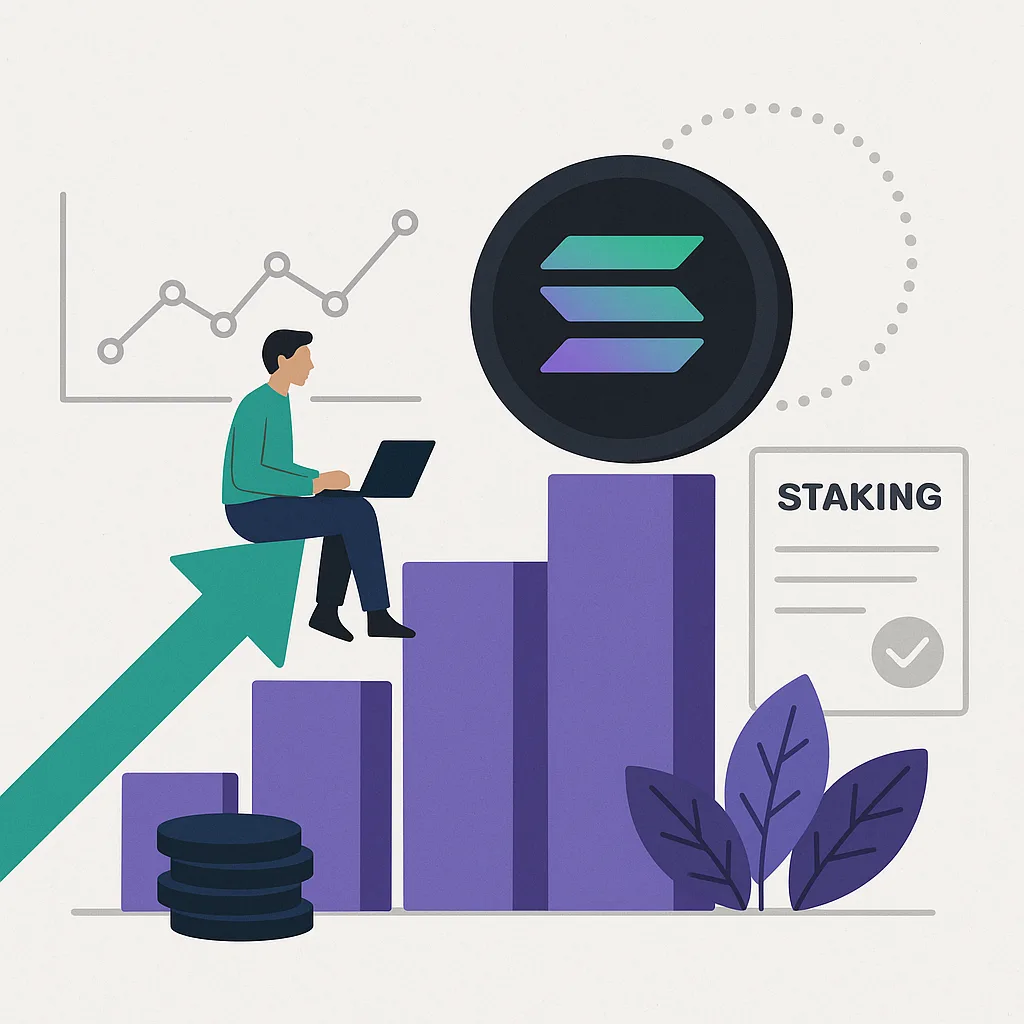
As the demand for blockchain technology continues to increase, Solana's unique offerings and capabilities position it well for future growth. Investors looking to diversify their portfolios with promising cryptocurrencies should consider exploring Solana not only for its potential price appreciation but also for the attractive staking opportunities it presents. Staking on the Solana network allows users to earn rewards while contributing to the network's security and efficiency, making it a win-win for crypto enthusiasts.
Understanding Staking: What It Means for Investors
Staking is a fundamental component of many cryptocurrencies, particularly those that operate on a proof-of-stake (PoS) consensus mechanism, like Solana. At its core, staking refers to the process of holding a certain amount of cryptocurrency in a wallet to support the operations of a blockchain network. In return for their contribution, stakers earn rewards, typically in the form of additional tokens. This not only incentivizes investors to participate but also enhances the security and efficiency of the network. Exploring Solana's utility in crypto.
For investors, staking offers a unique opportunity to generate passive income. Instead of merely holding coins and hoping for price appreciation, staking allows individuals to actively contribute to the network's health while simultaneously earning rewards. In the case of Solana, the staking rewards can be relatively attractive, with annual percentage yields that often surpass traditional savings accounts and even some other investment vehicles. This passive income stream can significantly enhance the overall returns on investment.
Moreover, staking is not just about the rewards; it also aligns the interests of investors with the long-term success of the network. When you stake your Solana (SOL) tokens, you are essentially putting your investment on the line, which encourages you to be more engaged and informed about the project. This deeper involvement can lead to better decision-making, as stakeholders are more likely to follow developments, understand market dynamics, and adapt their strategies accordingly.
However, it is essential to understand the risks associated with staking. While the potential rewards are appealing, investors should be aware of factors such as market volatility, lock-up periods, and the possibility of slashing—a penalty imposed on stakers for improper behavior or network failures. It's crucial for investors to do their due diligence and consider these aspects before committing their assets to staking. By having a comprehensive understanding of what staking entails, investors can make informed decisions that align with their financial goals and risk tolerance.
The Technology Behind Solana: Speed and Efficiency
Solana has gained significant attention in the blockchain ecosystem for its unparalleled speed and efficiency. At the core of its architecture is a unique consensus mechanism called Proof of History (PoH), which allows the network to process thousands of transactions per second. Unlike traditional blockchains that rely on time-stamping transactions through block confirmations, Solana's PoH establishes a historical record that proves that an event has occurred at a specific moment in time. This innovative approach eliminates the need for nodes to communicate and agree on time, drastically reducing latency and enhancing throughput. Beginner's guide to crypto staking.
Additionally, Solana's architecture incorporates a multi-threaded processing model, enabling the parallel execution of smart contracts. This is a significant departure from the conventional single-threaded processing of many other blockchains, which often leads to bottlenecks and inefficiencies. By leveraging a system of parallel transaction processing, Solana can accommodate a higher volume of transactions without sacrificing speed. This capability not only makes it an attractive platform for developers looking to build decentralized applications (dApps) but also positions Solana as a formidable competitor in the rapidly evolving landscape of blockchain technology.
The efficiency of Solana's network is further enhanced by its low transaction costs. Users can enjoy transaction fees that are a fraction of a cent, making microtransactions economically viable. This cost-effectiveness is crucial for applications that require high transaction frequency, such as decentralized finance (DeFi) platforms and non-fungible tokens (NFTs). As a result, Solana has become a preferred choice for projects that aim to deliver seamless user experiences without the burden of high fees typically associated with other blockchains.
Moreover, the scalability of Solana's technology is a game-changer for the future of blockchain applications. With its current capabilities, the network can handle up to 65,000 transactions per second, a feat that is not only impressive but essential for supporting mass adoption. As more users and projects flock to the platform, Solana's commitment to scalability ensures that it can maintain high performance levels even during peak usage times. This combination of speed, efficiency, and cost-effectiveness makes Solana an attractive option for both developers and investors, underscoring the potential for significant growth within the ecosystem.
Investment Potential: Analyzing Solana's Market Position
As the cryptocurrency landscape continues to evolve, Solana has emerged as one of the most promising blockchain platforms, distinguished by its high throughput and low transaction costs. Launched in March 2020, Solana's unique architecture allows it to process thousands of transactions per second, making it an attractive option for developers and investors alike. The platform's growing ecosystem of decentralized applications (dApps), including decentralized finance (DeFi) platforms and non-fungible token (NFT) marketplaces, positions it as a key player in the competitive cryptocurrency market.
One of the most compelling aspects of Solana is its commitment to scalability. Unlike many other blockchain networks that face congestion issues during peak usage times, Solana's proof-of-history consensus mechanism enables it to maintain high performance without sacrificing decentralization. This ability to scale effectively not only enhances user experience but also attracts institutional interest and investment, as companies seek platforms that can handle increased transaction volumes without degradation in service quality. Understanding proof of stake options.
Furthermore, Solana's active development community and robust partnerships have contributed to its market position. With backing from notable venture capital firms and collaborations with various tech companies, Solana has seen a surge in its adoption rates. This growth is reflected in its market capitalization, which has placed it among the top cryptocurrencies globally. Investors are increasingly recognizing the potential for significant returns, especially as Solana continues to attract new projects and users.
In addition to its technological advantages, Solana's staking opportunities further enhance its appeal as an investment asset. By participating in staking, investors not only contribute to the network's security but also earn rewards in the form of additional SOL tokens. This dual benefit of potential appreciation in the value of the asset combined with staking rewards creates a compelling investment proposition. As Solana continues to expand its ecosystem and improve its infrastructure, it is well-positioned to capitalize on the growing demand for blockchain solutions, making it a noteworthy consideration for both retail and institutional investors.
Staking Mechanics: How to Get Started with Solana
Getting started with staking Solana (SOL) can seem daunting for newcomers, but the process is relatively straightforward. First, you will need to acquire some SOL tokens, which you can purchase from various cryptocurrency exchanges. Once you have your tokens, the next step is to choose a wallet that supports Solana and allows for staking. Popular wallets include Phantom, Sollet, and Solflare, each offering user-friendly interfaces and strong security features.
After setting up your wallet, you will need to deposit your SOL tokens into it. Ensure that you choose a wallet that allows you to stake directly from it, as this will simplify the process significantly. Once your tokens are in your wallet, you can start the staking process by selecting a validator. Validators play a crucial role in the Solana network by processing transactions and securing the blockchain. It’s important to choose a reputable validator, as this can affect your staking rewards. You can find information about different validators, including their performance and commission rates, on various blockchain explorer sites.
Once you’ve selected a validator, the staking process typically involves just a few clicks. You will need to delegate your SOL tokens to the chosen validator, which allows them to use your tokens to help secure the network and, in return, you will earn staking rewards. The delegation process is usually simple and can be completed directly through your wallet’s interface. Keep in mind that once you delegate your tokens, there may be a short locking period during which you cannot withdraw your tokens or change validators. Trade PENDLE/USDT.
Finally, it’s essential to understand the rewards structure in Solana staking. Staking rewards are typically distributed every epoch, which lasts approximately two to three days. The amount you earn will depend on the amount of SOL you have staked, the performance of the validator you’ve chosen, and the overall staking rate in the network. Monitoring your rewards can help you optimize your staking strategy, such as switching validators if necessary. By following these steps, you can successfully stake your SOL and take advantage of the benefits that come with participating in the Solana ecosystem.
Benefits of Staking Solana: Passive Income Opportunities
Staking Solana offers a unique avenue for investors to generate passive income while contributing to the security and efficiency of the network. By participating in staking, holders of Solana (SOL) can earn rewards simply by locking up their tokens in a validator's node. This process not only enhances the network's decentralization but also provides a consistent and potentially lucrative source of income, making it an attractive option for both seasoned investors and newcomers alike.
One of the primary benefits of staking Solana is the high annual percentage yield (APY) it can offer. Compared to traditional savings accounts or bonds, which often yield minimal returns, staking SOL can result in significantly higher rewards. The APY for staking Solana typically ranges between 5% to 7%, though this can vary based on network conditions and the specific validator chosen. This return is paid out in SOL, allowing stakers to compound their earnings, thereby increasing their total holdings over time.
Furthermore, staking Solana minimizes the risks associated with market volatility. While the cryptocurrency market is notoriously unpredictable, staking provides a more stable way to earn returns on your investment. Instead of trading SOL and exposing yourself to potential losses during price dips, staking allows you to hold your assets long-term while still reaping the benefits of passive income. This strategy can be particularly appealing for those who believe in the long-term success of the Solana ecosystem.
Another significant advantage of staking SOL is the community aspect it fosters. By staking your tokens, you actively participate in the governance of the network, giving you a say in important decisions regarding upgrades, fee structures, and overall protocol direction. This democratic element not only enhances your investment but also connects you with a community of like-minded individuals who share your passion for the Solana blockchain. In summary, staking Solana presents an excellent opportunity to earn passive income, mitigate risk, and engage with the vibrant Solana community. BTC price.
Risks and Considerations: What Investors Should Know
While Solana presents lucrative opportunities for staking and investment, it is essential for potential investors to be aware of the inherent risks involved. One of the primary risks associated with investing in Solana is market volatility. Cryptocurrencies, including Solana, are known for their price fluctuations, which can be influenced by a variety of factors such as market sentiment, regulatory news, and technological developments. Investors should be prepared for the possibility of significant price swings that could impact their investment value.
Another important consideration is the technological risk inherent in any blockchain project. Although Solana has made impressive strides in scalability and transaction speed, it has faced outages and performance issues in the past. These technical challenges can affect user confidence and impact the overall stability of the network. Investors should conduct thorough research into the platform's technological developments and community responses to these challenges before committing their funds.
Additionally, staking on Solana carries its own set of risks. When you stake your SOL tokens, you are essentially locking them up for a certain period, which means you won't have immediate access to them if the market takes a downturn or if you need liquidity for other investments. This lack of flexibility can be a downside for investors who prefer to have quick access to their funds. Moreover, the staking process itself can sometimes lead to slashing risks, where validators may face penalties for downtime or malicious behavior, which, in turn, could affect your staked rewards.
Lastly, regulatory considerations should not be overlooked. The cryptocurrency landscape is under increasing scrutiny from regulators around the world. Changes in regulations can impact the viability of staking opportunities and the overall market environment for Solana. Investors need to stay informed about potential regulatory changes and how they might affect their investments. By understanding these risks and considerations, investors can make more informed decisions when exploring staking opportunities within the Solana ecosystem. Markets.
Conclusion: Is Solana the Right Investment for You?
As you consider the various investment opportunities in the cryptocurrency space, Solana presents a compelling option for both seasoned investors and newcomers alike. With its unique combination of high-speed transactions, low fees, and a robust ecosystem, Solana has positioned itself as a strong contender in the blockchain arena. However, as with any investment, it is crucial to weigh the potential benefits against the risks involved.
One of the key advantages of investing in Solana is its staking mechanism, which not only allows you to earn passive income but also enhances the security and efficiency of the network. By staking your SOL tokens, you contribute to the overall stability of the blockchain while simultaneously reaping the rewards. This dual benefit makes Solana attractive for those looking to generate returns on their investment over time.
However, potential investors should remain aware of the inherent volatility in the cryptocurrency market. While Solana has shown significant growth and adoption, the landscape can change rapidly due to regulatory developments, market sentiment, or technological advancements. It's important to conduct thorough research and consider your investment horizon, risk tolerance, and overall financial goals before committing to Solana or any other cryptocurrency.
In summary, if you are looking for a blockchain project that combines speed, scalability, and staking benefits, Solana may be the right investment for you. As you navigate the complexities of the crypto market, remember to stay informed, diversify your portfolio, and keep an eye on long-term trends. By doing so, you can make a more informed decision about whether Solana aligns with your investment strategy.