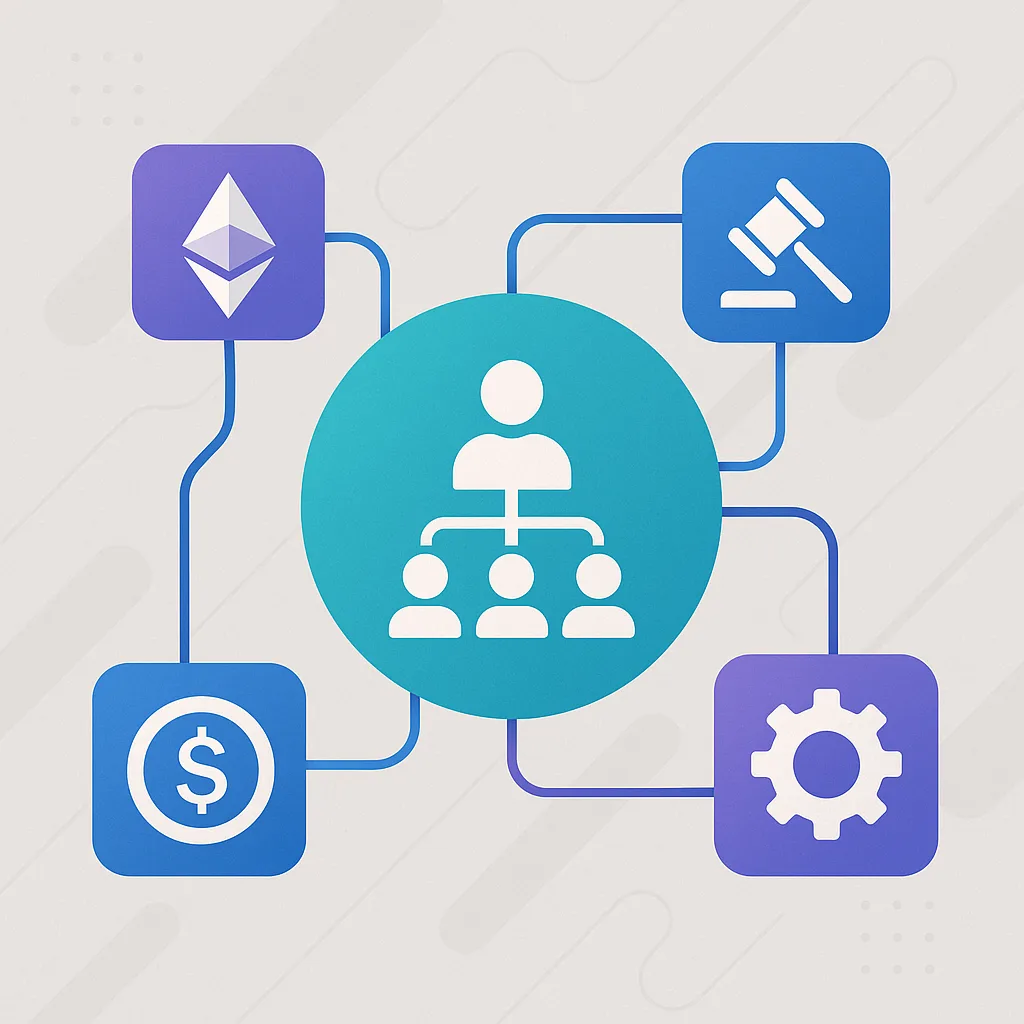
Introduction to $LEND and Its Vision for 2026
As the decentralized finance (DeFi) landscape continues to evolve, the emergence of innovative tokens like $LEND is shaping the future of governance and financial services. Launched in early 2026, $LEND aims to revolutionize how users interact with decentralized platforms by providing a streamlined governance model that prioritizes transparency, accessibility, and community-driven decision-making. With a vision that extends beyond traditional finance, $LEND seeks to empower users by giving them a voice in the evolution of DeFi protocols, thereby fostering a more inclusive financial ecosystem.
The core philosophy behind $LEND is to create a decentralized platform where every stakeholder has a stake in the decision-making process. In a world where financial systems are often criticized for their opacity and exclusivity, $LEND endeavors to turn the tables by utilizing blockchain technology to ensure that governance is not only democratic but also efficient. By leveraging smart contracts, $LEND facilitates a model where token holders can propose and vote on changes to the protocol, enabling a real-time adaptation to the needs of the community.
Looking ahead, $LEND envisions a world where governance is not a bottleneck but a catalyst for innovation. By 2026, the developers behind $LEND anticipate the integration of advanced technologies such as artificial intelligence and machine learning to further enhance the decision-making process. This will allow for data-driven insights that can guide the community in making informed choices, thus minimizing risks and maximizing opportunities. Additionally, partnerships with other DeFi protocols and traditional financial institutions are on the horizon, aiming to bridge the gap between conventional finance and the burgeoning world of DeFi.
Ultimately, the vision for $LEND in 2026 is to cultivate a vibrant community where every participant feels empowered to contribute and benefit from a shared success. As DeFi continues to challenge the status quo of financial governance, $LEND stands at the forefront, ready to lead the charge towards a more equitable and innovative financial future. With an unwavering commitment to user-centric governance and cutting-edge technology, $LEND is poised to redefine the principles of governance in the DeFi space, paving the way for a new era of financial empowerment.
The Evolution of Governance in DeFi
Decentralized Finance (DeFi) has undergone a remarkable transformation since its inception, particularly in the realm of governance. Initially, governance in DeFi projects was rudimentary, often relying on centralized decision-making processes that contradicted the very principles of decentralization. As the ecosystem matured, there was a clear necessity for more robust and democratic governance frameworks. The rise of governance tokens, such as $LEND, signaled a pivotal shift towards more equitable participation in decision-making processes, empowering token holders with voting rights and a say in the direction of projects. Innovations reshaping decentralized finance.
Governance systems have evolved from simple voting mechanisms to complex multi-faceted structures that integrate community feedback, expert input, and algorithm-driven decision-making. This evolution has been crucial in addressing the inherent challenges of decentralized governance, such as voter apathy and coordination issues. The introduction of liquid democracy models and quadratic voting has allowed for a more nuanced approach to governance, where stakeholders can express their preferences more accurately and with greater impact. Projects leveraging these innovative governance models have seen increased community engagement and a stronger alignment of interests among participants.
Furthermore, the integration of $LEND into governance frameworks underscores the growing importance of economic incentives in shaping governance behavior. By tying governance rights to a stake in the protocol's success, projects can foster a sense of ownership and responsibility among their community members. This financial alignment encourages active participation in governance discussions and voting, as stakeholders are more likely to engage when they have a direct economic interest in the outcomes. As a result, we are witnessing a shift towards more dynamic and sustainable governance models that adapt to the evolving needs of the DeFi landscape.
As we move into 2026, the future of governance in DeFi appears bright, driven by innovation and a commitment to decentralization. The rise of $LEND represents not just a technological advancement but a broader cultural shift towards community-driven governance models. As more projects adopt these frameworks, we can expect a significant transformation in how decentralized communities operate, enabling more inclusive, transparent, and responsive decision-making processes that truly reflect the voices of their members.
How $LEND is Innovating Governance Models
The landscape of decentralized finance (DeFi) is rapidly evolving, and at the forefront of this transformation is $LEND, a governance token that is redefining how communities engage in decision-making processes. Traditional governance models often suffer from centralization and inefficiency, leading to disenfranchisement among community members. $LEND addresses these challenges by leveraging innovative mechanisms that empower token holders and enhance transparency. Scaling DeFi for mass adoption.
One of the hallmark features of $LEND's governance model is its emphasis on decentralization. Unlike conventional systems where a select few hold the reins, $LEND distributes governance power across its entire network. This is achieved through a tiered voting system that allows users to propose and vote on changes to the protocol. Each token holder’s voting power is proportional to their stake, ensuring that every voice is heard and considered in the decision-making process. This method encourages active participation and fosters a sense of ownership among community members.
Furthermore, $LEND introduces a dynamic proposal framework that enables real-time feedback and adjustments. Community members can submit proposals that are subject to a thorough review process, allowing for constructive discussion before any decision is finalized. This iterative approach not only enhances the quality of governance proposals but also cultivates a culture of collaboration and innovation within the ecosystem. By incorporating mechanisms for community input at each stage, $LEND ensures that governance remains agile and responsive to the ever-changing DeFi landscape.
Lastly, $LEND’s governance model incorporates advanced data analytics to inform decision-making. By utilizing blockchain analytics and on-chain data, the governance framework can assess the potential impact of proposed changes, providing token holders with comprehensive insights before they cast their votes. This data-driven approach bridges the gap between technical expertise and community participation, resulting in more informed decisions that align with the collective interests of the $LEND ecosystem. In essence, $LEND is not just a token; it represents a paradigm shift in how governance can be executed in DeFi, paving the way for more inclusive, efficient, and innovative governance structures.
User Participation: Empowering the Community
As decentralized finance (DeFi) continues to evolve, the emphasis on user participation is becoming increasingly paramount. In 2026, the rise of $LEND has exemplified a shift towards community-driven governance models that prioritize the voices of users. Unlike traditional financial systems, where decisions are made by a select few, DeFi platforms built around $LEND facilitate a democratic process, allowing every token holder to have a say in the project's direction. This transformation not only fosters engagement but also builds a sense of ownership among users, enhancing the overall health of the ecosystem.
The decentralized governance structure surrounding $LEND empowers users by enabling them to propose and vote on key changes within the platform. This could range from adjusting protocol fees to implementing new features or even altering the governance framework itself. By leveraging smart contracts, $LEND ensures that the voting outcomes are transparent and tamper-proof, thereby increasing trust within the community. This mechanism creates a vibrant feedback loop where active participants can influence the platform’s development, leading to more innovative solutions tailored to user needs. Impact of MakerDAO in DeFi innovations.
Moreover, user participation in governance is not merely about voting; it encompasses a broader engagement strategy that includes community discussions, forums, and educational initiatives. Initiatives like community AMAs (Ask Me Anything sessions) and town halls allow users to voice their opinions and share insights, fostering a collaborative environment. As users become more informed and engaged, they contribute invaluable perspectives that can drive the project forward. This collective intelligence is vital for identifying challenges and opportunities within the rapidly changing DeFi landscape.
Ultimately, the rise of $LEND signifies a pivotal moment in the DeFi space, where community empowerment is at the forefront. By prioritizing user participation, the platform not only enhances its resilience but also ensures that it remains adaptable to the evolving needs of its constituents. As we move deeper into 2026, the lessons learned from $LEND's approach to governance will likely serve as a blueprint for other DeFi projects, reinforcing the idea that the future of finance is inherently collaborative and inclusive.
Decentralized Decision-Making: A Case Study
The rise of decentralized finance (DeFi) has fundamentally altered the landscape of governance in financial systems, shifting power from centralized authorities to community-driven models. A prominent example of this evolution can be seen in the governance structure of the $LEND token, which has gained significant traction in 2026. By utilizing a decentralized autonomous organization (DAO), $LEND empowers its community of holders to take an active role in decision-making processes, ensuring that the platform's development and direction are aligned with the interests of its users.
At the heart of $LEND's governance model is a unique voting system that allows token holders to propose and vote on critical changes within the ecosystem. Whether it’s adjusting interest rates, implementing new features, or allocating funds for community projects, every $LEND holder has a voice. This structure not only democratizes decision-making but also encourages active participation. As a result, stakeholders are more likely to engage in discussions and contribute to the platform's growth, knowing their opinions matter.
One notable instance of this decentralized decision-making in action occurred earlier this year when the $LEND community voted to implement a new lending protocol designed to enhance liquidity and attract more users. The proposal was initiated by a group of developers who identified a gap in the market for low-interest loans aimed at small businesses. After extensive discussions in community forums, a voting period was opened, allowing token holders to weigh in on the proposal. The overwhelming support from the community underscored the collective desire for innovation and the importance of aligning the platform’s offerings with user needs.
Furthermore, this case study illustrates the potential for increased transparency and accountability in governance. Unlike traditional financial systems, where decisions are often made behind closed doors, the $LEND DAO operates with a high degree of openness. All proposals, discussions, and voting results are recorded on the blockchain, allowing anyone to review the decision-making process. This transparency fosters trust among users, ultimately leading to a more robust and resilient ecosystem. By rethinking governance through the lens of decentralized decision-making, $LEND not only exemplifies the possibilities of DeFi innovations but also sets a precedent for future projects aiming to empower their communities.
Comparative Analysis with Traditional Governance Models
As decentralized finance (DeFi) continues to evolve, the governance structures inherent to this emerging sector present a stark contrast to traditional governance models found in centralized financial systems. Traditional governance often relies on hierarchical frameworks where decision-making power is concentrated among a few executives or board members. This centralization can lead to inefficiencies, lack of transparency, and, in some cases, misalignment between the interests of stakeholders and those of the governing body. In contrast, DeFi governance, exemplified by the rise of $LEND, promotes a more democratic and participatory approach.
The $LEND token serves as a conduit for community members to engage in governance decisions, enabling token holders to vote on protocol upgrades, fee structures, and other critical parameters that affect the ecosystem. This model fosters greater transparency and accountability, as every decision is recorded on the blockchain and visible to all participants. Moreover, the decentralized nature of governance in DeFi minimizes the risk of manipulation or fraud, as no single entity holds the majority of power. This shift toward community-driven governance aligns incentives more closely with those of the users, creating a cooperative environment where every stakeholder has a voice.
Furthermore, the speed at which governance decisions can be made in the DeFi space contrasts sharply with the often protracted timelines of traditional systems. In a centralized model, proposals may undergo lengthy review processes, requiring extensive documentation and approvals from multiple tiers of management. Conversely, DeFi initiatives, particularly those utilizing $LEND, can implement changes rapidly through smart contracts that automate voting and execution, allowing for a more agile response to market dynamics and user needs.
However, it is essential to acknowledge the challenges associated with decentralized governance. While the democratic nature of $LEND offers significant benefits, it also raises concerns regarding voter participation, potential for governance attacks, and the complexity of decision-making processes. Users may lack the requisite knowledge or motivation to engage actively, leading to a small subset of participants dominating the voting process. Addressing these issues will be crucial as DeFi continues to mature, ensuring that the governance models remain equitable and effective. CRV price.
Future Prospects: $LEND's Role in the DeFi Ecosystem
The decentralized finance (DeFi) landscape is evolving at an unprecedented pace, and at the forefront of this revolution is $LEND, a token that is increasingly becoming synonymous with innovation and accessibility in the financial sector. As we move further into 2026, $LEND is poised to solidify its position as a cornerstone of DeFi applications, driving user engagement and liquidity across various platforms. With its unique attributes, $LEND not only facilitates seamless transactions but also promotes financial inclusion by enabling users to access services that were once reserved for the traditional banking sector.
One of the most significant prospects for $LEND lies in its potential for integration with emerging technologies, particularly in the realms of artificial intelligence and blockchain interoperability. As DeFi protocols seek to enhance user experiences, $LEND can leverage AI algorithms to optimize lending processes, assess creditworthiness, and tailor financing solutions to individual needs. This level of personalization could dramatically improve user satisfaction and retention, further entrenching $LEND in the fabric of DeFi.
Moreover, the rise of cross-chain capabilities is another critical factor that could define $LEND's future. As DeFi platforms increasingly seek to operate across multiple blockchain networks, $LEND stands to benefit from its adaptability and the growing need for liquidity across different ecosystems. By aligning itself with projects that promote interoperability, $LEND can enhance its utility, allowing users to access a broader range of financial products and services regardless of the underlying blockchain. This interconnectedness could lead to greater market efficiency and open the door to new investment opportunities.
Furthermore, community governance is an essential aspect of $LEND’s future, as it empowers token holders to influence the direction of the protocol. By fostering a robust governance model, $LEND can ensure that its development aligns with the interests of its community, driving innovation and responsiveness to user needs. As more users become involved in the governance process, we can expect a more vibrant and dynamic ecosystem, one that continually adapts to the changing landscape of DeFi. In this way, $LEND is not just a token; it represents a movement towards a more decentralized and equitable financial future. Markets.
Conclusion: The Future of Governance in DeFi
The landscape of decentralized finance (DeFi) is rapidly evolving, and with it, the mechanisms of governance that underpin these revolutionary financial systems. The emergence of governance tokens like $LEND highlights a significant shift in how financial products are managed and operated. As we look towards the future, the need for more inclusive and participatory governance structures becomes increasingly apparent. The ability for stakeholders to actively shape the protocols they use is not just a benefit; it's a fundamental necessity for the long-term viability of DeFi platforms.
In 2026, we foresee governance in DeFi becoming more sophisticated, with protocols integrating advanced voting mechanisms and incentive structures that prioritize the needs and preferences of their users. The success of $LEND will likely inspire the development of new governance frameworks that emphasize transparency, accountability, and community engagement. These frameworks can empower users by granting them a voice in decision-making processes, fostering a sense of ownership and alignment with the platform's objectives. This shift towards decentralized governance will not only enhance user trust but also ensure that platforms remain adaptable to the rapidly changing financial landscape.
Moreover, as regulatory scrutiny intensifies, DeFi projects will need to demonstrate robust governance models that can withstand external pressures. Governance tokens like $LEND can serve as a blueprint for how to achieve compliance while maintaining the principles of decentralization. By innovating in governance, DeFi platforms can create a more resilient ecosystem that can navigate challenges and seize opportunities more effectively.
Ultimately, the future of governance in DeFi hinges on the ability of projects to balance decentralization with effective decision-making. As we move forward, the lessons learned from the adoption and evolution of $LEND will be crucial in shaping the next generation of governance models. By fostering a collaborative environment where users feel empowered to participate, DeFi can realize its full potential as a transformative force in finance, paving the way for a more equitable and accessible financial system for all.