Introduction to Crypto Investment & Staking
The world of cryptocurrency has evolved dramatically since the inception of Bitcoin in 2009. Today, it encompasses a myriad of investment opportunities, from buying and holding digital assets to participating in staking mechanisms. For both seasoned investors and newcomers alike, understanding the intricacies of crypto investment and staking is essential for navigating this dynamic market. This section provides an overview of what these terms mean and highlights their significance in building a diversified crypto portfolio.
Crypto investment refers to the act of purchasing digital currencies with the aim of holding them for future profit. Unlike traditional investments, cryptocurrencies are known for their high volatility, which presents both opportunities and risks. Investors can benefit from price surges, but they must also be prepared for the possibility of significant losses. As such, it is crucial for investors to conduct thorough research, develop a clear strategy, and stay informed about market trends. Additionally, diversifying one’s portfolio by investing in a variety of cryptocurrencies can help mitigate risks and enhance potential returns.
Staking, on the other hand, is a unique feature of certain cryptocurrencies that allows investors to earn rewards by participating in the network's operations. This process typically involves locking up a certain amount of cryptocurrency in a wallet to support the network's security and operations, such as validating transactions or creating new blocks. In return for their participation, stakers receive rewards, often in the form of additional tokens. Staking offers an attractive alternative to traditional investment strategies, as it generates passive income while still holding onto the underlying asset. However, it is essential to understand the specific staking requirements and risks associated with each cryptocurrency, as these can vary significantly.
As the crypto landscape continues to grow, investors are presented with an array of strategies to consider. Whether one chooses to focus on buying and holding, trading, or staking, it is vital to approach each strategy with a clear understanding of its mechanics and potential implications. By exploring diverse strategies for crypto investment and staking, investors can better position themselves to capitalize on the opportunities this innovative financial frontier offers. In the following sections, we will delve deeper into the various investment strategies and staking mechanisms available in the crypto space.
Understanding Different Types of Crypto Assets
As the cryptocurrency landscape continues to evolve, it's crucial for investors to understand the various types of crypto assets available in the market. Each category of assets offers unique characteristics, risk profiles, and potential returns, making it essential for investors to align their strategies with their financial goals and risk tolerance. Broadly speaking, crypto assets can be classified into three main categories: cryptocurrencies, tokens, and stablecoins. Beginner's guide to crypto staking.
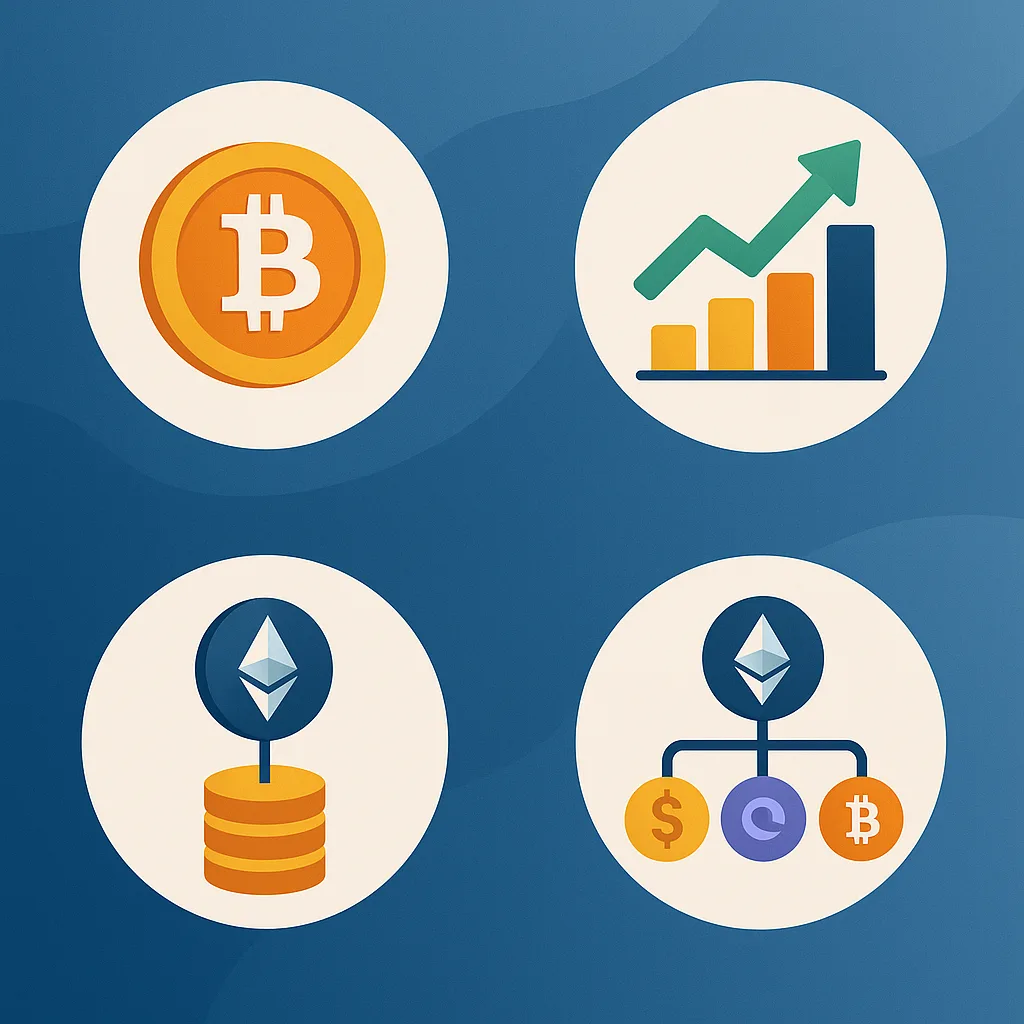
Cryptocurrencies, such as Bitcoin and Ethereum, are the most recognized and widely used digital assets. They operate on decentralized networks and are designed to function as a medium of exchange, a store of value, or a unit of account. Bitcoin, often referred to as digital gold, is primarily viewed as a store of value due to its limited supply and strong brand recognition. On the other hand, Ethereum, with its smart contract functionality, has paved the way for decentralized applications (dApps) and is often utilized in various blockchain-based projects. Investors may choose to allocate a portion of their portfolio to these established cryptocurrencies for long-term growth potential.
Tokens, in contrast, represent a unit of value issued on a blockchain and can serve various purposes within their specific ecosystems. They can be classified into utility tokens, which provide access to a product or service, and security tokens, which represent ownership in an asset or company. Utility tokens are often used in Initial Coin Offerings (ICOs) to raise capital for new projects, while security tokens are subjected to regulatory oversight and may offer dividends or profit-sharing opportunities. By understanding the utility and purpose of different tokens, investors can make informed decisions about which projects align with their investment strategies.
Stablecoins are another vital category of crypto assets, designed to maintain a stable value by pegging them to a reserve of assets, such as fiat currency or commodities. The most popular stablecoins, like Tether (USDT) and USD Coin (USDC), are often used for trading, lending, and earning interest in decentralized finance (DeFi) platforms. Investors may use stablecoins as a safe haven during volatile market conditions or to preserve their capital while still participating in the crypto ecosystem. By diversifying across these three categories of crypto assets, investors can create a balanced portfolio that leverages the potential for high returns while managing risk effectively.
The Role of Staking in Passive Income Generation
In the ever-evolving landscape of cryptocurrency, staking has emerged as a compelling strategy for investors seeking passive income. Unlike traditional methods of earning interest through savings accounts or bonds, staking allows individuals to earn rewards by participating in the network operations of proof-of-stake (PoS) cryptocurrencies. By locking up a certain amount of their tokens, investors can contribute to the security and efficiency of the blockchain while simultaneously generating income from their holdings. Guide to investment and staking.
The mechanics of staking are relatively straightforward. When an investor stakes their cryptocurrency, they essentially allow their tokens to be used in the validation process of transactions. In return for their contribution, stakers receive additional tokens as rewards, which can be viewed as a form of interest. This creates an attractive opportunity for those looking to maximize their investment without the need for active trading or management. Additionally, staking often entails lower energy consumption compared to traditional mining, making it a more environmentally friendly option.
Moreover, staking can significantly enhance the overall returns on an investment portfolio. As the value of the staked tokens appreciates over time, the compounded rewards can lead to exponential growth. Many platforms now offer user-friendly interfaces and tools that simplify the staking process, making it accessible even to those who may not be tech-savvy. This democratization of staking has led to a surge in popularity, with more investors embracing this strategy as part of their investment approach.
However, while staking presents numerous advantages, it is essential for investors to conduct thorough research before committing their assets. Factors such as the lock-up period, the staking rewards structure, and the overall health of the cryptocurrency network can significantly influence the potential returns. Additionally, investors should remain aware of the risks involved, including price volatility and the possibility of slashing, where a portion of staked tokens can be forfeited due to network misbehavior. By understanding both the benefits and the risks, investors can make informed decisions and effectively integrate staking as a viable strategy for passive income generation.
Evaluating Crypto Exchanges for Investment Opportunities
When embarking on your crypto investment journey, the selection of a reliable and user-friendly exchange is crucial. With countless platforms available, each offering unique features, it’s essential to evaluate them based on several key criteria. The first factor to consider is the security measures implemented by the exchange. Look for platforms that employ advanced security protocols, such as two-factor authentication (2FA), cold storage for assets, and regular security audits. A reputable exchange should transparently communicate its security policies, ensuring that your investments are safeguarded against potential threats.
Another vital aspect to assess is the range of cryptocurrencies available for trading. While many exchanges support popular coins like Bitcoin and Ethereum, a diversified portfolio often requires access to lesser-known altcoins. Consider exchanges that provide a wide variety of trading pairs and support for emerging tokens. This accessibility not only enhances your investment opportunities but also allows you to capitalize on market trends as they develop. Crypto investment and staking strategies.
Furthermore, trading fees can significantly impact your returns, making it essential to analyze the fee structures of different exchanges. Most platforms charge fees for transactions, withdrawals, and deposits. Some may offer tiered pricing based on trading volume, while others might provide incentives such as fee discounts for using the exchange's native token. Understanding the fee landscape can help you choose an exchange that aligns with your trading strategy and minimizes your overall costs.
Lastly, the user interface and customer support are critical factors for both novice and experienced investors. A user-friendly interface can simplify the trading process, making it easier to execute trades and manage your portfolio effectively. Additionally, responsive customer support can prove invaluable when facing challenges or needing assistance. Look for exchanges with robust support channels, including live chat, email, and comprehensive FAQ sections. By carefully evaluating these factors, you can choose a crypto exchange that not only meets your investment needs but also enhances your overall trading experience.
Diversification Strategies in Crypto Portfolios
Diversification is a fundamental principle of investing, and it holds true in the world of cryptocurrencies as well. By spreading investments across various assets, investors can mitigate risks and enhance the potential for returns. In the volatile crypto market, where prices can swing dramatically in a short period, a well-diversified portfolio can help cushion the impact of market fluctuations. The key is to strike a balance between different types of cryptocurrencies, including large-cap coins, mid-cap tokens, and emerging altcoins.
One effective strategy for diversification is to include a mix of established cryptocurrencies, such as Bitcoin and Ethereum, along with smaller, promising projects. Bitcoin, as the leading cryptocurrency, provides a level of stability and credibility, while Ethereum offers unique opportunities through its smart contract capabilities. By allocating a portion of the portfolio to these major players, investors can create a solid foundation. Meanwhile, adding mid-cap and small-cap assets can boost growth potential, as these coins often have room for significant appreciation as they gain traction in the market.
Another approach to diversification involves investing in different sectors within the crypto space. The industry encompasses a range of applications, from decentralized finance (DeFi) and non-fungible tokens (NFTs) to blockchain infrastructure and supply chain solutions. By diversifying across these sectors, investors can tap into various growth trends and reduce exposure to sector-specific downturns. For instance, while DeFi projects may experience rapid growth due to increased demand for decentralized lending and borrowing, NFTs could see fluctuations based on market sentiment related to digital art and collectibles.
Additionally, geographical diversification can play a role in a crypto investment strategy. Different regions may have varying regulations and adoption rates, which can influence the performance of certain cryptocurrencies. By investing in assets that are popular in emerging markets, as well as those that are well-established in more developed economies, investors can create a more resilient portfolio. Ultimately, a thoughtful diversification strategy tailored to individual risk tolerance and investment goals can enhance the overall performance of a crypto portfolio while reducing exposure to market volatility.
Risks and Challenges in Crypto Investment and Staking
Investing in cryptocurrencies and engaging in staking can be an exciting yet perilous endeavor. One of the foremost risks associated with crypto investment is its notorious volatility. Prices can swing dramatically in a short period, leading to significant gains or losses. This volatility can be exacerbated by factors such as market sentiment, regulatory news, technological advancements, and macroeconomic trends. Investors should be prepared for the psychological toll of watching their investments fluctuate wildly, as emotions can often lead to hasty decisions that may not align with their long-term investment strategies.
Another significant challenge is the lack of regulation and oversight in the cryptocurrency market. Unlike traditional financial markets, which are governed by strict regulations to protect investors, the crypto space is still evolving. This regulatory ambiguity can expose investors to fraud, scams, and the risk of losing funds to poorly managed exchanges or projects. The absence of regulatory frameworks means that investors must conduct thorough due diligence before committing their resources, often requiring a higher level of knowledge and experience than one might need in more established markets.
Security is also a critical concern in the world of crypto investment and staking. While blockchain technology is inherently secure, the platforms and wallets used to store and stake cryptocurrencies can be vulnerable to hacking and cyberattacks. Investors must take proactive steps to safeguard their assets, including using hardware wallets for storage and enabling two-factor authentication on their accounts. Furthermore, staking often requires locking up funds for a certain period, which can be risky if unforeseen events lead to a sharp decline in the value of the staked assets.
Lastly, the complexity of different staking mechanisms can pose challenges for investors. Various cryptocurrencies employ diverse staking models, each with its own rules, rewards, and risks. Understanding the intricacies of these models is essential for making informed decisions. Many investors may find themselves overwhelmed by the technical jargon and the need to stay updated on the project’s developments, leading to potential missteps in their strategies. Overall, while crypto investment and staking can yield substantial returns, it is crucial for investors to be aware of and mitigate the associated risks. CAKE price.
Future Trends in Crypto Investment & Staking
As the cryptocurrency landscape continues to evolve, investors and stakeholders are increasingly looking towards innovative strategies to enhance their portfolios. One of the most significant trends is the integration of decentralized finance (DeFi) platforms into traditional investment models. DeFi allows users to lend, borrow, and earn interest on their crypto holdings without the need for traditional banking intermediaries. This shift not only democratizes access to financial services but also introduces new opportunities for staking and earning passive income. As DeFi platforms become more sophisticated, we can expect to see a rise in hybrid investment strategies that combine traditional assets with crypto offerings, providing investors with a balanced approach to risk and reward.
Another trend shaping the future of crypto investment is the growing emphasis on sustainability and ethical investing. As environmental concerns surrounding energy-intensive mining processes gain traction, many investors are seeking out cryptocurrencies that advocate for eco-friendly practices. Proof-of-stake (PoS) and other low-energy consensus mechanisms are becoming increasingly popular as they reduce the carbon footprint associated with crypto transactions. In response, several projects are prioritizing sustainability, which could lead to a shift in investor preferences towards greener options. This trend not only reflects a broader societal concern for sustainability but also points to the potential for regulatory developments that may favor environmentally friendly practices in the crypto space.
Moreover, the regulatory landscape for cryptocurrencies is anticipated to undergo significant changes in the coming years. Governments around the world are wrestling with how to effectively regulate digital assets while fostering innovation. As clearer regulations emerge, they are likely to provide a more stable environment for institutional investors who have been cautious about entering the market. This could lead to an influx of capital into crypto investments and staking, driving further growth in the sector. Additionally, regulatory clarity may enhance the legitimacy of cryptocurrencies, which could attract a wider demographic of investors who have previously been hesitant to engage with this volatile market.
Finally, the rise of non-fungible tokens (NFTs) and digital collectibles is set to redefine investment strategies within the crypto space. Investors are beginning to see NFTs not just as digital art or collectibles, but as potential income-generating assets. The ability to stake NFTs or utilize them within DeFi ecosystems could open up new avenues for engagement and investment. As innovations in this area continue to develop, investors will need to remain agile and informed to capitalize on the opportunities presented by this dynamic segment of the market. Futures trading.
Conclusion: Making Informed Decisions in the Crypto Space
As we have explored throughout this blog post, the landscape of cryptocurrency investment and staking offers a myriad of strategies that cater to different risk appetites and investment goals. Whether you are a seasoned investor or a newcomer, understanding the intricacies of various investment strategies is crucial for navigating this dynamic space. The importance of conducting thorough research, staying abreast of market trends, and evaluating the fundamentals of each cryptocurrency cannot be overstated. With the volatility inherent to the crypto market, informed decision-making becomes your best ally.
One of the key takeaways from our discussion is the significance of diversification. Just as in traditional investing, spreading your investments across multiple assets can mitigate risk and enhance potential returns. By diversifying your crypto portfolio, you can balance out the fluctuations associated with individual cryptocurrencies and create a more stable investment strategy. Additionally, exploring different staking options can provide passive income opportunities while simultaneously contributing to the security and efficiency of the blockchain networks you support.
Moreover, it is essential to recognize the impact of external factors such as regulatory changes, technological advancements, and market sentiment on the performance of crypto assets. Keeping an eye on these factors can help you make timely adjustments to your investment strategy. Furthermore, participating in community discussions and following reputable analysts can provide valuable insights that enrich your understanding of the market landscape.
In conclusion, the world of crypto investment and staking is both exciting and challenging. By equipping yourself with knowledge, staying informed about market developments, and embracing a diversified approach, you can navigate the complexities of this space more effectively. Remember, the goal is not just to chase profits but to build a resilient investment strategy that aligns with your long-term financial objectives. As you embark on your crypto journey, take the time to evaluate your risk tolerance, set realistic goals, and remain adaptable in the face of an ever-evolving market.