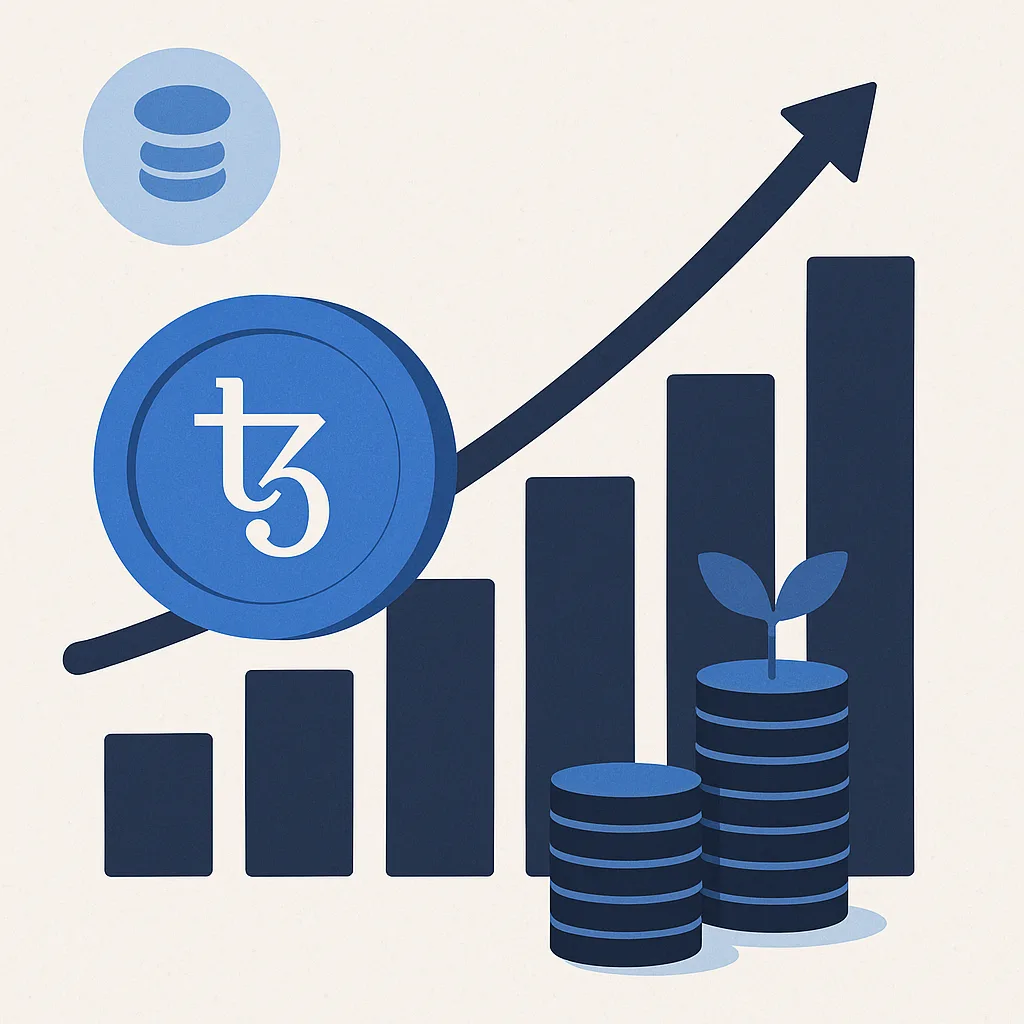
The Current Market Landscape for Tezos in 2026
As we move deeper into 2026, the cryptocurrency market continues to evolve at a breakneck pace, with Tezos standing out as a strong contender among its peers. The overall sentiment in the crypto sphere has shifted towards more sustainable and scalable blockchain solutions, and Tezos, with its unique proof-of-stake consensus mechanism, has positioned itself well to capitalize on this trend. The growing emphasis on eco-friendly technologies has placed Tezos in a favorable light, particularly as institutional investors increasingly favor projects that align with environmental, social, and governance (ESG) criteria.
The demand for decentralized applications (dApps) and smart contracts remains robust in 2026, with enterprises and developers seeking platforms that offer flexibility and low transaction costs. Tezos has consistently improved its technology through on-chain governance, allowing for seamless upgrades without compromising network stability. This feature attracts a diverse range of projects, from DeFi protocols to NFTs, further solidifying Tezos's reputation as a versatile blockchain ecosystem.
Moreover, the staking mechanisms of Tezos have garnered attention as more crypto enthusiasts look to earn passive income from their holdings. With staking rewards remaining competitive, investors find Tezos an appealing option for generating yield while maintaining exposure to the asset's long-term growth potential. This has contributed to a growing community of validators and delegators, enhancing the network's security and decentralization.
As we analyze the market landscape for Tezos in 2026, we observe an increase in institutional interest, strategic partnerships, and a robust development community. These factors, combined with the project's commitment to innovation and sustainability, suggest a promising trajectory for Tezos. Investors and stakeholders alike are keenly watching how these dynamics unfold, as they could significantly impact the price action and adoption rates of Tezos in the coming years. In summary, the current market landscape for Tezos in 2026 is characterized by growth potential, technological advancement, and an increasing focus on sustainable practices, making it a compelling investment opportunity. Guide to investment staking in crypto.
Unique Features of Tezos: Why It Stands Out
Tezos is making waves in the blockchain ecosystem, not just for its robust technological framework but also for its unique governance model. One of the standout features of Tezos is its on-chain governance, which empowers stakeholders to participate in the decision-making process. This means that holders of Tezos (XTZ) tokens can propose and vote on amendments to the protocol, ensuring that the network evolves in response to its community's needs. This self-amending capability distinguishes Tezos from many other blockchain projects, which often require hard forks to implement significant changes.
In addition to its governance structure, Tezos employs a proof-of-stake (PoS) consensus mechanism that promotes energy efficiency and scalability. Unlike traditional proof-of-work systems, which require immense computational power and energy consumption, Tezos allows token holders to 'delegate' their staking rights without needing to lock their funds. This delegation process enables more participants to engage in staking, thereby enhancing network security while also making it accessible to a broader audience. The dynamic staking model not only incentivizes participation but also fosters a sense of community and shared responsibility among Tezos users.
Another distinctive feature of Tezos is its focus on formal verification, a process that mathematically proves the correctness of smart contracts. This level of rigor helps eliminate bugs and vulnerabilities that can plague decentralized applications (dApps) on other platforms. As the demand for secure and reliable smart contracts continues to grow, Tezos positions itself as a frontrunner for enterprises and developers seeking assurance in their blockchain solutions. This emphasis on security, combined with its innovative governance and staking mechanisms, sets Tezos apart in an increasingly crowded market.
Lastly, the active development community surrounding Tezos consistently pushes the envelope to enhance its capabilities. With ongoing upgrades and improvements, Tezos is not just a static project but rather a living ecosystem that adapts and grows. This adaptability and focus on community-driven development are crucial for attracting both developers and investors alike. As we look toward 2026, these unique features will likely play a significant role in Tezos's growth trajectory and its ability to remain competitive in the blockchain landscape. Understanding risks in crypto staking.
Investment Strategies for Tezos in 2026
As we look ahead to 2026, investors interested in Tezos must consider a variety of strategies to maximize their returns in a rapidly evolving digital landscape. One of the most effective ways to invest in Tezos is through staking, which allows holders to earn rewards by participating in the network's governance and transaction validation. By staking your Tezos tokens, you not only contribute to the security and efficiency of the network but also have the potential to earn a steady yield. This passive income can be a compelling reason to hold onto Tezos, especially as the demand for staking opportunities continues to grow.
In addition to staking, diversification is a key strategy for mitigating risk in your investment portfolio. While Tezos has shown resilience and promising growth in the blockchain space, it is wise to balance your investments across various cryptocurrencies and assets. This approach can help cushion against market volatility and allow you to capitalize on the strengths of different blockchain projects. Consider allocating a portion of your portfolio to established cryptocurrencies, emerging altcoins, and even traditional assets to create a well-rounded investment strategy.
Moreover, staying informed about the developments within the Tezos ecosystem is crucial for making informed investment decisions. With ongoing upgrades and innovative projects being built on the Tezos blockchain, investors should keep a close eye on upcoming initiatives, partnerships, and technological advancements. Engaging with community forums, attending conferences, and following key influencers in the Tezos space can provide valuable insights that may influence your investment choices.
Lastly, setting clear investment goals and timelines is essential for any investor. Determine your risk tolerance, investment horizon, and desired return on investment. This clarity will guide your decisions, whether you opt for short-term trading strategies or long-term holding. As the blockchain industry continues to mature, those who approach their investments with a strategic mindset and a willingness to adapt will likely find success in the dynamic world of Tezos. Proof of stake vs delegated proof of stake.
Staking Tezos: How to Get Started
Staking Tezos is a straightforward process that allows you to earn rewards while supporting the network's operations. To begin, you need to acquire some XTZ, the native cryptocurrency of the Tezos blockchain. You can purchase XTZ through various cryptocurrency exchanges that support the asset. Once you have your XTZ, the next step is to choose a wallet that supports staking. Popular options include the Tezos wallet, Temple wallet, and Kukai wallet, each offering user-friendly interfaces and security features.
After setting up your wallet and transferring your XTZ, you can proceed to stake your tokens. The Tezos network operates on a liquid proof-of-stake (LPoS) mechanism, which means you can delegate your tokens to a baker (the term used for Tezos validators) without losing ownership of them. This delegation allows you to earn rewards while maintaining control over your assets. Research various bakers to find one that aligns with your interests, such as their fee structure, reliability, and performance history. Many bakers also offer additional incentives, so choosing the right one can maximize your staking rewards.
Once you've selected a baker, the delegation process is typically done directly through your wallet interface. You will find an option to delegate your XTZ to your chosen baker, and after confirming the transaction, your tokens will be staked. It’s important to note that while staking, your tokens will remain locked for a specific period, typically around 30 days, depending on the delegation terms. However, you can always undelegate your tokens if you decide to switch bakers or want to access your funds.
As you begin staking Tezos, it’s crucial to monitor your staking performance periodically. Most wallets provide insights into your earnings, which can help you assess whether your current baker is meeting your expectations. Additionally, staying informed about the Tezos ecosystem and participating in community discussions can enhance your understanding of factors influencing staking rewards and network performance. With the right approach, staking XTZ can be a rewarding investment strategy that contributes to the growth of the Tezos network.
Potential Risks and Challenges in Tezos Investment
While investing in Tezos presents numerous opportunities, potential investors must also be aware of the inherent risks and challenges associated with this blockchain platform. One of the primary concerns is the volatility of the cryptocurrency market as a whole. Like many altcoins, Tezos can experience significant price fluctuations, influenced by market sentiment, regulatory developments, and broader economic conditions. Investors should be prepared for the possibility of sudden downturns that could impact their staked assets, especially during bear markets.
Another challenge lies in the governance model of Tezos itself. While the self-amending feature of the blockchain allows for upgrades and improvements without the need for hard forks, it also means that governance decisions are subject to the whims of the token holders. This can lead to potential conflicts or disagreements within the community, affecting the overall direction of the project. If significant stakeholders fail to agree on key upgrades or changes, it could stall the development and growth of the Tezos ecosystem.
Additionally, competition in the blockchain space is fierce, with numerous platforms vying for dominance in areas such as smart contracts, decentralized finance (DeFi), and non-fungible tokens (NFTs). Tezos must continuously innovate and differentiate itself from competitors like Ethereum, Cardano, and Solana, all of which have their own strengths and weaknesses. Should Tezos fail to maintain its competitive edge or attract new developers and projects, its long-term growth prospects may be jeopardized.
Finally, regulatory scrutiny is an ever-present concern for cryptocurrencies, including Tezos. As governments around the world begin to establish clearer frameworks for digital assets, any negative regulatory actions could have adverse effects on the price and adoption of Tezos. Investors should remain vigilant about the evolving legal landscape and how it may influence their investments. In summary, while Tezos offers attractive staking opportunities and growth potential, it is essential for investors to carefully consider the associated risks and challenges before diving in.
Future Predictions for Tezos: What to Expect
As we look ahead to 2026, the landscape of blockchain technology and cryptocurrency is likely to be vastly different from what we see today. Tezos, with its unique governance model and focus on self-amendment, positions itself as a strong contender in the evolving market. Analysts predict that the demand for decentralized applications (dApps) and smart contracts will continue to surge, and Tezos, with its robust platform designed for these purposes, is well-poised to capitalize on this trend. OP price.
One of the key factors that may drive Tezos' growth is its ongoing commitment to technological upgrades and community involvement. The platform's ability to implement changes through on-chain governance allows it to adapt quickly to market needs and technological advancements. This flexibility not only enhances Tezos' scalability but also fosters a sense of community ownership among its stakeholders, making it an attractive option for developers and investors alike. Additionally, as environmental concerns surrounding blockchain technology grow, Tezos’ proof-of-stake consensus mechanism offers a sustainable alternative, appealing to a broader audience concerned with ecological impact.
Market analysts also foresee a potential increase in institutional adoption of Tezos. As more businesses recognize the benefits of blockchain, the demand for reliable and efficient platforms will rise. Tezos' partnerships with various enterprises and its focus on compliance and security could position it favorably in this emerging market. By 2026, we may witness a significant uptick in enterprise-level projects leveraging Tezos, further solidifying its status as a leading blockchain solution.
Furthermore, as the cryptocurrency market matures, investors are becoming more discerning, looking for projects with strong fundamentals and innovative technology. Tezos’ proven track record of upgrades and its vibrant community of developers may attract more long-term investors. This could lead to an increase in the Tezos token (XTZ) value, especially if the platform can maintain its momentum and continue to evolve in a rapidly changing environment. Overall, the future of Tezos appears promising, with numerous growth avenues that could unfold as we approach 2026.
Conclusion: Is Tezos a Worthy Investment in 2026?
As we look towards 2026, the question of whether Tezos is a worthy investment becomes increasingly relevant for both seasoned investors and newcomers to the cryptocurrency market. Tezos has consistently demonstrated its commitment to innovation and adaptability, characteristics that are vital in the rapidly evolving landscape of blockchain technology. With its self-amending protocol, Tezos positions itself as a forward-thinking project capable of responding to the changing needs of its users and the broader market. Markets.
The staking mechanism of Tezos further enhances its appeal as an investment. By allowing holders to delegate their tokens and earn rewards, Tezos not only incentivizes participation but also fosters a sense of community among its users. This staking feature could be particularly attractive in a market environment where passive income opportunities are becoming increasingly sought after. As more investors recognize the potential for earning rewards through staking, the demand for Tezos may continue to grow, further solidifying its market position.
Moreover, the partnerships and collaborations that Tezos has forged over the years could play a significant role in its growth trajectory. As various sectors, including finance, art, and gaming, begin to adopt blockchain technology, Tezos is well-positioned to capture a share of these emerging markets. The platform's focus on scalability and user-friendliness makes it a strong contender for enterprises looking to implement blockchain solutions, which could drive further adoption and, by extension, increase the value of its native cryptocurrency, XTZ.
However, potential investors should remain mindful of the inherent risks associated with cryptocurrency investments. The market is notoriously volatile, and while Tezos has shown resilience, it is not immune to market fluctuations. Conducting thorough research and understanding the dynamics of the Tezos ecosystem will be crucial for anyone considering an investment. In conclusion, while Tezos presents a compelling case for investment in 2026, it is essential to weigh the potential rewards against the risks, ensuring that any investment aligns with one's overall financial strategy.